≡ Menu

Learning to Accept New Tech

Everything New is Old Again

Apparently coffee houses were the vice of choice for college students in Oxford in the 1600s. A recent NYTimes article talks about the jovial and intellectually stimulating atmosphere of Ye Olde StarrBuchs distracting people from work and school.

It’s the same song, 2nd verse as Facebook and other social networks are critics’ latest scapegoat of declining productivity levels at work today.

“Social network as efficiency killer” is an illusion, though, isn’t it? People will always find ways to shoot the breeze with co-workers and friends. The 17th-century coffee house is a fine example of the past social behaviors of the human worker. Equating historical cultural phenomena to today’s trends helps us understand and perhaps predict people’s behavior with new technologies.

Getting to the Heart of It

Preparing people for a new future by taking a peek into the past is all a matter of asking the right question.

Wrong question:

“What would Americans in 1820 have done with a cell phone?” 

Right question:

“What did Americans in 1820 do with a steam engine or an electric light?

When we take a few steps back from the details, we see the constants that influence human behavior. The new question becomes:

“How have people, historically, reacted to major disruptions?” 

If we want to look at a more detailed picture, we add in a little context:

“How have people adopted and adapted to new technology that changed their social environment drastically within 5-10 years?”

How We Mourn and Accept Change

I’ve asked these questions before with other examples that correlate well with today’s changing technology landscape. If we think about the introduction of washing machines and automobiles, we can see the progression of certain social requirements. People were expected to own more clothes and wash them more often. With cars, people were expected to accept that their grown children may move away and find different careers and spouses than those available in town.
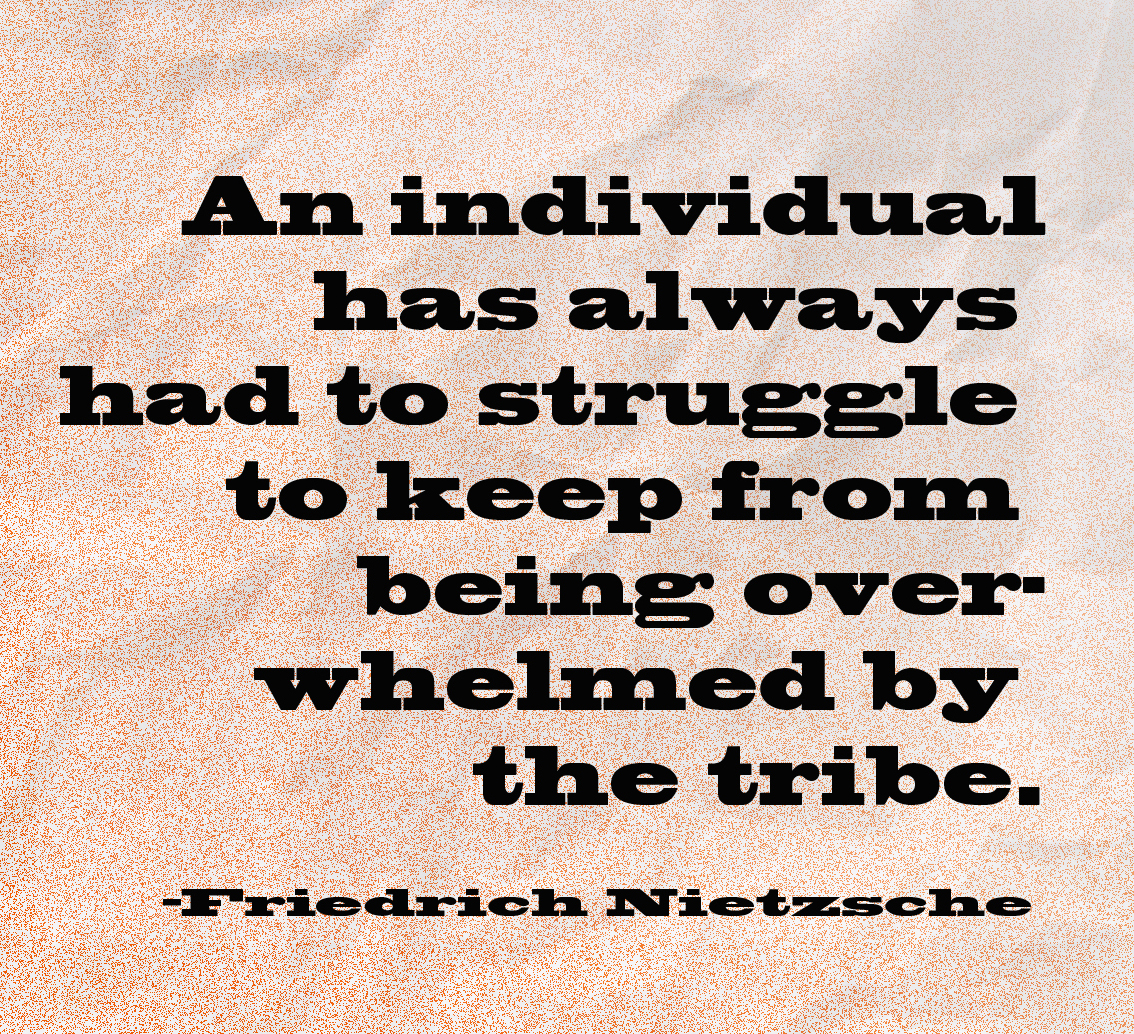
An individual has always had to struggle to keep from being overwhelmed by the tribe. -Friedrich Nietzsche

Friedrich knew Facebook…

In every new industrial revolution, there exist all types of early adopters, luddites and separatists. A change involves an ending of something. Endings often involve mourning. We get a little sad when we have to junk heap our first car. We love graduating from school but are sad to see it all end.

Along with taking a look at historical examples of industrial revolutions, I thought we could also gain some understanding on our mixed reactions to new tech by taking a look at the bittersweet twinge of grief that accompanies any advancement.

Using Elisabeth Kühbler-Ross’s famous 5 Stages of Grief (Denial, Anger, Bargaining, Depression, Acceptance), we can examine some typical reactions to sweeping social and cultural changes brought on by tech. Let’s look back into the past and imagine some reactions to the steam train and electric lamps:

DENIAL: “Those trains and electric lights won’t change this town one bit. We’re all going to be exactly the same people, doing the same things we always do.”

ANGER: “Who’s the idiot politician who brought in these train tracks and this electricity?! I’m going to run him over with my horse.”

BARGAINING: “If I buy up as much land as possible, I can keep the train tracks from going through town. If I preach about how electricity is the Devil’s light, we can go back to using gas lamps.”

DEPRESSION: “Just let them build the tracks. Nothing matters anymore. My whole world has been ruined. You can put the lights in but I’d rather just sit here in darkness until I die.”

ACCEPTANCE: “Okay. So there is a train. Maybe I can take it into the city to find work. And these lights are less dangerous than the gas-leaky ones.”

Today’s Bittersweet Tech

Let’s speed back up to today. Apply these stages to people’s reactions to the advent of cell phones:

DENIAL: 

“Someday soon, I may be the last man in America without a cell phone. … I’m a dropout and aim to stay that way.”– Robert J. Samuelson, Newsweek 2004. 

“I’ve yet to use a cellphone and I’ve never Tweeted or entered Facebook.” – Pico Iyer, NYTimes December 29, 2011

ANGER: 

I hate cell phones. Don’t you? After having a cell phone for about 3 years, I have realized that I am sick of them. I hate having to take calls and talking to people.”  – User Pengwuino on Physicsforums.com Aug 23, 2005

“I hate Steve Jobs. I mean he got the whole world addicted to iPods, iPhones, iPads …” – Ming Jong Tey October 8, 2011 (<-He actually loves/hates Steve Jobs, though)

BARGAINING: 

“Truthfully, I’d love nothing more than to go back to the days before cell phones and such. Kids actually got tans naturally because the went outside to play, and grade-school children didn’t have cell phones.” – Adam Bigelow, Quora March 12, 2013

“I would love to go back to the days before cell phones and before Internet.”  – Anonymous 22 year old American female June 26, 2013

DEPRESSION:

The last bastion of peace and (relative) quiet is slowly eroding away … I dread the day when everyone on the train is chatting with someone simply because they have nothing better to do during the commute.” – Owen Diaz September 9, 2012

“The trouble with the quiet car is simple: not everyone is quiet.” – Roi Ben-Yahuda December 31, 2010, on the use of cell phones in Amtrak’s “Quiet Car”

“Cell phones depress me. Artificial methods of conversation depress me.” – User Era-Sure December 11, 2006

ACCEPTANCE:

“We are living in an extremely exciting time in terms of science and technology.”Jordan Lejuwaan May 5, 2010

“It’s a new world — and technology is a part of it.” Stephanie Smith, Montana resident talking about Yellowstone National Park visitors, January 19, 2013

 “President Obama recognizes that technology is an essential ingredient of economic growth and job creation.”White House Official Website

distringit librorum multitudo

“The abundance of books is distraction.” Too much data for Seneca.

Give Peace A Chance

There is a time and a place for every stage of mourning over societal changes. Have patience with your analog friends. Give encouragement to some sad saps. Most people will come around eventually, and then we can all discuss our collective history and our hopefully unified, unbound future.

6 comments
twitter screen shot

The woman stood for 13 hours, and we all watched the last few of them.

Hang on to your Santana Boots, Sisters, because a deluge of horse manure (and maybe some gems) are coming your way about the live-streaming of the Texas State Legislature’s adventures in filibustering with Senator Wendy Davis. Using the #istandwithwendy hashtag on Twitter and on Facebook (which added hashtags less than a week ago?), users from all over spread the sound of the Filibuster Heard Round The World, and they tweeted out a link to its live-stream. Reports of over 150,000 people worldwide were watching the stream after midnight DST on the East Coast of the US.

Not one traditional news outlet even mentioned the white hot activity. It would have been quite easy to notice as a trend, seeing there was just one hashtag to unite it all. They didn’t want to send your attention away from their news network and onto youtube. That’s the only reason I can imagine: Money.

Lots will be said, speculated, gotten wrong, and manipulated about this story. But know this: We were there. We saw. We remember. It was as simple as watching a live stream. When my Internet blipped at 1:00 a.m., I simply picked up my iPhone and kept watching.

This is revolution. This is bigger than us. This is a wave we cannot control. A comet careening toward the sun. Put on your seatbelts, y’all. It’s going to be a bumpy ride.

2 comments

QUESTIONS, QUESTIONS, QUESTIONS ABOUT KIDS AND PORN

Judging by the amount of traffic this blog post  gets from search terms that surround the subject of kids kids looking at porn, I’m guessing many parents and guardians are under stress over what to do when they discover a child has been searching out pornography on the Internet.

baby at a computer looking at a scantily clad woman

No, no, baby. Those don’t work.

This is one of those family issues that falls in the cracks of being within the parents’ skill level to handle and needing a professional’s intervention. Adults are usually able to implement basic restrictions like “You are not permitted to look at porn,” but they may find themselves repeating this tenet at increasing decibel levels as the child ignores the rule and continues to break it.

When the computer goes back to the shop for the 3rd, 4th, or 5th time for repairs (read: virus cleansing), it’s time to stop yelling and take more action. Below are some approaches you can do right now for different age groups. First, though, I’d to quickly chat about natural disasters.

TAKING A HINT FROM THE NATIVES

When a natural environment is prone to shift quickly, it is essential to educate youngsters on risks. Geographically dangerous areas like earthquake fault lines, tornado alleys or flash-flood areas have been inhabited for thousands of years. People thrive in those areas by learning how to survive the sudden and sometimes unpredictable onslaught of deadly weather. The threat of bad storms is a constant spector in those native cultures. This means that each child from Day 1 is told stories, given instructions, and armed with survival techniques. As toddlers, children are taught how to duck under tables, run to shelters, or avoid certain dangerous flood paths. There is no fear or secrecy, just respect for the power of the storms and methods for survival.

Potentially damaging data on the Internet is like an earthquake, a tornado and a flash flood combined. Emails, text messages, websites, all deliver scary and/or pornographic links and images by the second. We have not yet integrated the folklore and the survival lessons we need to teach children into our culture. We must talk to children at very early ages about where they decide to put their eyes. Good idea/bad idea is a concept even the tiniest of tots understand. Good images/bad images along with good sites/bad sites also have to be part of the conversation.

I’ll go into more step-by-step detail about how this folklore can be passed down to your children in another post. For now, here are some quick tidbits of information you can use with each porn-curious child in your home right now:

STEPS TO TAKE IMMEDIATELY IF YOUR CHILDREN ARE SEARCHING FOR PORN ONLINE

Late Teens, Early Adults: 14+ years of age

I’ve encountered parents who have given up and are simply waiting until the porn-loving kid leaves the house. This endure-until-they’re-gone method, plus very good, updated-daily virus protection software may be the only hope for parents of kids in their late teens. Other things you can do to protect your family from virus, hackers, and the federal government:

  • Consult a computer network expert and perhaps isolate that child’s machine from all others in the house (yes, this is possible. It may cost extra with your Internet Service Provider).
  • Regularly monitor the machine for images that may be child pornography, because the Feds are tracking that crap and will knock on your door. If your child is a minor and you pay for the network, states vary on the level of prosecution you personally may face.
  • Take away all machines and Internet access <-This is almost impossible nowadays. Better to simply tread carefully and keep a watchful eye.


Early Teens, Tweens: 10-14 years of age

The early aged children of this group are just starting to understand there is a whole sex industry out in the world. If you find “porn” in your search history, assume your younger children need the definition of the word. Symantec did a study on over 1 million child users in their network and found that the word “porn” was in the top ten of words being looked up. The search mostly likely was solved by having the definition of the word on the first page. Work on a more open dialog between you and your younger kids. The goal is to get them to ask you or a trusted adult the meaning of terms they hear on the bus instead of risk seeing the horrific images that result from a web search. Images can act like real physical trauma for young children.

The tweens of this group are more seasoned. They may want to just see the opposite sex’s anatomy, or other examples of their own sex’s anatomy. This is normal. If you have some science books around or some medical anatomy sites, bookmark those and make it clear that those are the only ones permitted. Explain how the family’s finances, security and well-being can be compromised by visiting porn sites. Assume every free porn image has virus embedded in it, and explain this clearly. Assume every porn image portraying young people is child pornography and therefore a federal crime. This age group still understands the concepts of rules and authority in general. Bringing up the Feds might be a little too scary, so use your best judgment. And again, I cannot stress this enough: buy and install virus protection software and set it to update daily.

Small Children: 10 years of age and under

Most family experts show concern if children of this age group are regularly seeking out pornographic images and sexual information on the Internet. Trying to find a definition of a term is one thing. Sneaking away to look up explicit images and video is another. Start with very clear talks with all children this age. Rules of Internet use and searching behavior should be written on a list and placed next to machines. Use your instincts if something seems not right. Don’t panic, though. You’d be surprised to learn what psychologists consider in the range of normal behaviors.

If you feel as though your young child has a destructive habit that is too tough to break on your own, approach your family doctor first. (Notice I did NOT say school counselor. Over the years, I’ve had less and less faith in the public and private school systems to handle struggles with pornography. Plus, confidentiality standards are more strictly followed in a medical environment.)  Start with a family doctor you trust. Ensure there are no sensory issues, ADHD, or other mental differences that are contributing to the behavior. Ask for recommendations for counselors. Children of this age benefit greatly from sessions with an Art Therapist or Music Therapist. These professionals are fully trained counselors that utilize non-verbal expressions to help children feel comfortable and safe to open up.

Follow the recommendations of the specialists. It’s an ongoing process and will take time to reset the communication standards in your family. Don’t forget to cleanse the machines of all virus and offending material. And can I say this again? Virus protection software. Even if you trust your own children, friends of theirs might not be so pure.

GET VIRUS PROTECTION SOFTWARE RIGHT NOW

Best of luck. And remember: virus.protection.software. The kind you pay for is better than the kind you don’t, but free stuff is better than nothing. Do it today, especially if your house has PCs and not Apple computers. I run Kaspersky on my Macs, because there is virus for everything now (just less frequent for Macs).


Photo credit: Christine Cavalier, PurpleCar

1 comment

Traditional media seems to just now discovered the Internet. For example, recently major news outlets like CNN jumped on racist tweets some feral animals posted after a kid dressed in Mariachi costume sang the national anthem at an NBA playoff game.

Here’s a news flash for all you old newsroom boys: There are trolls on the Internet! OMG!

bottom of an empty wooden barrel

Scrape, scrape, scrape.

People have complained for centuries about the sensationalistic tendencies of news media. The news media say that type of reporting is necessary to sell papers. People say they feel shame looking at such crap but can’t help themselves. Parents want to watch the nightly news to feel aware of what’s happening in the world but must suffer through mountains-out-of-molehill stories to get to any information of worth, and even then the crap is splattered with bloody tales of murder and mayhem that the children shouldn’t see.

The public shapes the media and the media shapes the public. Sure. But it is a never-ending arms race between media publishers to see who can get the most ad dollars.

I’m an ’80’s girl, so I’ve already learned the lesson of how to win an arms race, courtesy of WarGames: “The only winning move is not to play.”

I stopped watching all nightly news and reading daily newspapers in September, 2001. I realized there is no such thing as eye bleach, and images haunt, traumatize, and strike fear. Where there is fear, there is only flight or fight. There is no fix. There is no learning.

Let’s do our best to not scrape (or read) the bottom of the humanity barrel of tweets or Facebook posts. We all are quite aware that people say racist things. It’s news when famous cook-it-in-butter chef Paula Deen admits on YouTube to dropping the N-word. It is NOT news when some unknown country bumpkin drops racial slurs all over the Internet.

Watchdog/awareness sites aside, this sensationalist quoting of a few idiots on Twitter isn’t entertaining and eventually it won’t sell.


photo credit: Flickr user Kelly Cookson
3 comments

SheTech Philly Spotlight

She Tech Philly, the site about all things women and tech in Philly, has honored me with a spotlight today. Make sure to check out their other spotlights of up and coming women in the local tech scene!

20130619-110802.jpg
0 comments