
Popular psychology’s “they” say that ‘everyone collects something.’
It took me a while to think about what I collect. I have a pretty big fabric and art supply stash (there probably aren’t very many crafts left in the world that I haven’t tried). I have a pretty filled-up font book on my Mac. But I don’t house my collections in some cabinet like rare coins. I don’t collect anything of any value. They are supplies that can be replaced easily, a means to an end, like keeping a well-stocked food pantry. I’m not too exciting that way.
Characters with a collecting habit can be pretty interesting. The plotline can go so many different ways. Is your character poor but saves and saves for a haute couture dress she is never going to wear? Is your character wealthy beyond imagination but loves vintage broken checker sets? Why do they collect? Is it a secret? Do they have friends/competitors that collect the same objects?
The psychology behind collecting isn’t well defined, but this website had a good summary:
For some people collecting is simply the quest, in some cases a life-long pursuit that is never complete. Additional collector motivations include psychological security, filling a void in a sense of self. Or it could be to claim a means to distinction, much as uniforms make the “man.” Collections could be a means to immortality or fame …
For some, the satisfaction comes from experimenting with arranging, re-arranging, and classifying parts of a-big-world-out-there, which can serve as a means of control to elicit a comfort zone in one’s life, e.g., calming fears, erasing insecurity. The motives are not mutually exclusive, as certainly many motives can combine to create a collector – one does not eat just because of hunger.
We are writers; This picture of a harmless collector trying to make sense of the world is lacking drama. Throw some obsession into it (a la Indiana Jones) and you’ll run into some inner and outer conflict when a character has to choose between the collection and something or someone equally as important.
If the collecting obsession truly turns sour, it is known as “hoarding.” Hoarding is the extreme case of collecting. Whereas collecting is a pursuit or a quest as an end in itself, hoarding behavior forsakes all other people and things. Often, a hoarder will harm others in their attempts to gather as much of the object as possible. Hoarders are those types that save every newspaper ever delivered to them or have 200 cats living in their house. It’s a psychological pathology that needs treatment. A hoarding character has the potential of taking over your book. For example, serial killers are thought to be hoarders of people. Entire books are written around this pathology, so make good choices on how obsessive you would like your character to seem.
One of my characters likes antiques. Mostly a very frugal person, she is a big fan of antiques from the Mayflower and Puritan England, and sneaks away to look for expensive pieces to buy any chance she gets. Her family is aware of it; her furniture collecting is pretty harmless, and this character has a mansion to fill anyway. But the want of this particular kind of antique says something about her wants and desires, especially when compared to her 1st generation off-the-boat italian catholic upbringing. Choose your character’s collection so it shows a deeper, unexpected side of him or her. When do they find time to go searching? How many hours do they spend? Do they keep the treasures or give them away? Is it about the pursuit or the obtaining or both? What sense are they trying to make of the world? There are so many opportunities to show and not tell with a character’s collecting.
Think first of what you might collect now or started to collect as a child. Baseball cards? Matchbooks? Obsolete technology? See what your imagination can do when you collect your thoughts around collecting, and write on. Come back to PC and let me know what you came up with!
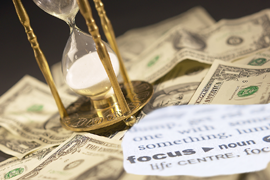 Writing is an art. Time-worn cliches about suffering for art aside, as writers, our particular brand of suffering is twofold: being misunderstood and fighting against the clock. Writing isn’t seen as an art by the general public. When someone uses paint and canvas, she is easily identified as an artist. The word “serious” is tacked onto “artist” to connote a painter who sells their work or has reached a minimum level of critical notice. When we call ourselves writers, people “write us off” unless we can spout out a long list of glossy publishing credits, three best sellers and a prize-winning book of poetry. It’s as if writing isn’t permitted to be classified as a legitimate pastime. If you write, people think you must do it for money. If you haven’t earned any money (or at the very minimum, a publishing credit) you’re a hack wasting your time. Poets especially garner the disdain of the “show me the money” public.