by Christine Cavalier
on 28 March 2014

Temporary tats of my QR code. Pretty much all I can stand.
10 years ago today on March 28, 2004, I started PurpleCar.net. Back in those post-LiveJournal (est. 1999) and pre-everybody Facebook (opened in 2006) days, choosing an anonymous username to blog under was like deciding on a face tattoo: You had to love it, as it was going to be your permanent identity. After weeks of wimping out, I settled on a co-worker’s nickname for me, based on my spouse’s surname which translates to “purple,” and my surname Cavalier which was a popular Chevy model at the time. I still have yet to decide on a tattoo.
After a decade online as PurpleCar, it really wouldn’t be such a bad idea to etch the alias across my forehead. I’m now synonymous with my [continue reading…]
by Christine Cavalier
on 4 February 2014
 Help! My Facebook’s on Fire
In a (not-so-)shocking turn of events, a flame war erupted amongst a Facebooker’s friends and acquaintances over her question of whether or not to get a flu shot. The vexed poster sought out modern etiquette guru Amy Vernon for advice. Ms. Vernon answered Frazzled-by-the-Flu-Shot’s question, but not before she gives us a funny meta moment with a warning of her own:
“Try not to get into arguments over vaccines in the comments. And if you start insulting other commenters (no matter which side you come down on in the vaccine argument), I will delete your comments and consider barring you from commenting here. Let’s all conduct ourselves with the proper degree of #SMEtiquette, shall we?”
Ms. Vernon demonstrated the very secret she’s about to impart: One must manage their community. [I’ll pause here and say vaccine arguments or other flame wars aren’t welcome in my comments either.]
More of Ms. Vernon’s advice to this perplexed flu-flipflopper in a minute. First let’s talk a little bit about identity, branding, and personality. This has a chance of not being as boring as it sounds. Stick with me.
15 Minutes of Community Management
[continue reading…]
by Christine Cavalier
on 20 January 2014
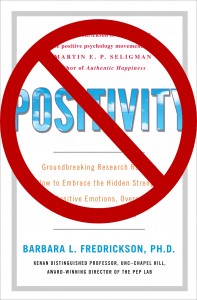
Ignore the maths in this book.
The Guardian has an in-depth piece on how amateur psychologist Nick Brown exposed the funny (read: false) math behind the “Positivity Ratio” that has been plastered all over the news and academia. You may have heard of it: You need to emphasize 3 positive things (or 2.9013 to be exact) for every 1 negative thing in order to keep a positive attitude and live a happy life.
Turns out it’s all bunk, of course:
“[Nick Brown] went back over Losada’s equations and he noticed that if he put in the numbers Fredrickson and Losada had then you could arrive at the appropriate figures. But he realised that it only worked on its own terms. ‘When you look at the equation, it doesn’t contain any data. It’s completely self-referential.'”
Positive Psychology should stick with the business-lecture circuit and stay out of the stats & measurement trenches if it wants to “flourish” instead of “languish.”
Hat tip to John Hunter on Twitter for the find.
by Christine Cavalier
on 16 January 2014

What if we just admitted we didn’t want to be here?
The Great Distractor
Why do I open up my laptop with the intention of writing and then end up wandering around the Web? Why do I check my Twitter stream when I’m supposed to be enjoying my kid’s holiday concert?
I’m not the only one doing this crap. Study after study is published about how adults and children spend two, three, even ten hours a day online. Thoroughly distressed by these numbers, we ask, “What is all this tech doing to us?”
In short, it has caused a zombie apocalypse. We’re texting and driving (DRIVING!). We’re scrolling through our social networks at the dinner table. We’re Snapchatting during movies and culture events. The tech has made us into zombies. But the real question is, “Why?”
The answer to why we are all so distracted by our tech isn’t as simple as Shiny New Toy Syndrome or contagious bad etiquette. The answer goes much deeper, too deep for contributors (read: unpaid bloggers) at major media outlets like Forbes and HuffPo to ponder. We are so loath to bring the root cause to the surface that an entire industry grew out of the need to keep it repressed. Let’s be brave here for a moment and bring a sample of root causes to the surface:
SOME TRUTH FOR ADULTS
5 REAL REASONS WHY YOU ARE LOOKING AT YOUR PHONE DURING YOUR KID’S EVENT:
[continue reading…]
by Christine Cavalier
on 4 January 2014
Water-Logged
A special kind of heartache is reserved for those of us who, after having searched high and low for our FitBits, find our tiny fitness trackers lifeless, still attached to clean, dried and neatly folded clothes from last week’s workout. At $100 a pop, realizing that you’ve drowned your tech amounts to no small dent in your day.
“Putting your wearable tech through the wringer” isn’t meant to be taken literally, but judging by the FitBit forums I’ve visited, washing-machine accidents seem to be the leading cause of death of the small-but-expensive activity monitors. I’m personally on my 2nd FitBit because of this not-so-clear and present danger. So far, “don’t leave your fitbit clipped to your clothes” isn’t a lesson I’ve had to learn twice. But I have to say, that first FitBit fail makes me less inclined to use my new tracker at all. I used to wear my FitBit 24/7 (yes, it monitors sleep activity), but now I wear it so infrequently that it sits power-drained for days and must charge for a few hours before I can use it. (This usually means I don’t wear it for that workout). Since yoga and pilates (which won’t exactly register with the Fitbit) have taken over my fitness schedule, I’ve almost abandoned tracking entirely.
Tech for Truth
My behavioral habit of wearing a fitness tracker was derailed by a technological limitation (lack of waterproofing). As the tech evolves, these tech glitches will be smoothed over. My guess is we’ll eventually move to implants. Why rely on fallible, washing-machine wielding humans to attach and [continue reading…]