
Here’s a short video (about 2 minutes) I made for you that pokes a little fun at the whole world of social media consulting.
We need a word that has the following definition:
Comments left on internet or web sites that are the result of a person lowering their inhibitions and/or getting caught up in the passion of the moment, in which these comments don’t necessarily reflect the commenter’s common views. Such comments are usually anonymously given. Sometimes referred to as: Flotsam, Junk, Flame.
The word has to connote the passion of the moment and the total divorced-from-reality quality of the tone of the comment. For example, when a commenter wishes death upon a blog writer. This (probably anonymous) commenter would never wish death upon the writer in person, but the nature of the Internet is the more passionate, the better the comment. I’d like a word that dismisses this type of behavior. “Jank” or “Internet Jank” kind of fits…
The other question is, do we want to dismiss this behavior? Do we want to term it? Because when you give something a name, it becomes real and in a way, legitimate.
I don’t know. Anyway… these are typical musings of an Internet/word geek.
Yesterday I received the following spam (phishing) email:
From: DHL Logistics Services <manager.no.6980@dhl.com>
To: [purplecar]
Sent: Mon, November 8, 2010 10:59:41 PM
Subject: DHL Tracking number N37234
Good afternoon
Your package has been returned to the DHL office.
The reason of the return is – Incorrect delivery address of the package
Attached to the letter mailing label contains the details of the package delivery.
You have to print mailing label, and come in the SDF office in order to receive the packages.
Thank you for your attention.
DHL Global Services.
I closed the email without clicking on the attachment and forwarded it to abuse@dhl.com. That address didn’t work; it was a guess anyway. I would have to find a contact person at the DHL site. I searched Google for the DHL site. The abuse hotline or email address wasn’t readily apparent, so I went to the “Logistics” page and used their web-enabled contact form. I didn’t send the attachment but I copied in the entire abuse email with full headers. Here is DHL’s official response:
Hello Christine,
Thank you for contacting DHL.
Please be advised that if you received an email suggesting that DHL is attempting to deliver a package, requesting that you open the email attachment in order to affect delivery, this email is fraudulent, the attachment is a computer virus, and the package does not exist.
Please do not open the attachment. This virus does not originate from DHL.
Thank you for bringing this to our attention. I can assure that this is not the practice of DHL and we are taking precautions to stop this fraudulent activity. Please make a note that in future you may reach our Fraud Department directly at Fraud.alert@dhl.com or by Fax: 773-409-5068.
Please use the following link to get more information:
http://www.dhl-usa.com/CustServ/VirusFraudAlert.asp
We apologize for any inconvenience
Kind regards,
Jennifer D’souza
Digital Marketing DHL.com
Send any suspicious-looking emails that purport to come from DHL to Fraud.alert@dhl.com. As Ms. D’souza said, DO NOT OPEN THE ATTACHMENT. Forward the email to Fraud.alert@dhl.com and then delete it. Opening it should be OK as long as your computer doesn’t run .exe attachments or open attachments automatically. It’s a good idea to click “cancel” or “no” if any .exe prompt comes up when you are checking email anyway. System updates and other such important stuff will try again. Virus stuff only gets a chance to run when you open up the attachments in email.
Thanks to Jennifer D’souza and DHL for the prompt and informative response.
__________________________
Ya wanna know something weird? I just went in my email to copy the text of the spam email. Whilst I was highlighting the entire email, look at what popped up in the seemingly blank space below the email. It was “invisible” because it was in white type against a white background:
I crouched in my corner, cold and cramped, trying to visualise the terror of it.I asked myself whether I was afraid. Not of Death, I told myself. But of being afraid–yes, most horribly. At five oclock we halted at a junction, where a troop-train from the Front was already at a standstill. Tommies in steel helmets and muddied to the eyes were swarming out onto the tracks. They looked terrible men with their tanned cheeks and haggard eyes. I felt how impractical I was as I watched them–how ill-suited for campaigning. They were making the most of their respite from travelling. Some were building little fires between the ties to do their cooking–their utensils were bayonets and old tomato cans; others were collecting water from the exhaust of an engine and shaving. I had already tried to purchase food and had failed, so I copied their example and set about shaving.
OK so if I saw that, I would have definitely known it wasn’t from DHL. Does anyone know why this kind of spam is getting sent around? I’ve seen it before, and I’m not quite getting what the purpose is. Is some stark raving mad bad writer out to spam us all with his dreck? I just don’t get it. Please clue me in with a comment. Thanks.
UPDATE: My friends Zach Petersen and Rob Harrison pointed out the obvious to me as to why these blocks of text are in these messages. Spam filters are not sophisticated enough to see past the block of text. To the spam filter, the whole email seems OK because it looks like there are real, non-spammy messages in the body of the email. This is why, of course, the spammers make the text white, so you don’t see the poorly-typed-in-copied-text and immediately recognize it as spam.
The DHL spammers seem to employ this paste-in-text-and-make-it-undetectable method, so make sure to highlight the entire message if it seems to be coming from an official source. If there is odd text in it, you can be 100% certain it is spam and delete it.
Thanks, Zach and Rob for reminding me about how spam filters work. I dumbed out there for a second.
SECRETS OF SOCIAL MEDIA: BUILDING ONLINE COMMUNITY
Social media gurus spew jargon. If you attempt to quantify such statements as “Build Your Community Online” you may become frustrated because no-one tells you what building community actually means and how to build community around your skills or your brand.
I’ve done all this for a while and I’m an expert in how people behave, so I’ll let you in on what, physically and mentally, “Building Community Online” really means. First, we’ll see what “Community” is defined as, and second, we’ll talk about how to build community.
DEFINE COMMUNITY
“Community” is a broad term, but surprisingly, it is NOT the people you want to sell to. Let me repeat: “COMMUNITY” IS NOT YOUR CUSTOMERS.
That deafening gasp you hear is coming from the multitudes of online charlatans who call themselves “social media experts.” [Here’s an aside: There are very few social media experts around. There is absolutely no certification or recognized degree program in “Social Media,” and for the generally accepted term “expert” to apply, a person must have at least a Masters level degree or successful passing of nationally recognized standardized certification tests (or both). 20 years of experience may substitute in some cases, but otherwise those are the minimum requirements for “expert.”] OK, back to the gasping. Don’t worry, those social media gurus will get their breath back just in time to leave me flame comments.
Here’s the revolutionary secret that those lightheaded masses won’t tell you: COMMUNITY IS YOUR FELLOW BELIEVERS. Any true community is already sold on you, your brand, your profession or your product. You do not have to sell to these people; they already believe in you and/or what you do. Your community is made up of people who will find you customers. They will refer their own friends and contacts to you. Why will they do this? Because, as I said, they’re believers. You need to find these believers. When you find them, don’t sell, sell, sell. Don’t pitch. You don’t need to sell to them, and doing so will just make you seem disingenuous. I will get to what you should do in a minute.
OK, to lay it out plainly,
YOUR COMMUNITY is made up of:
- Professionals In Your Field
- Some Professionals In Closely Related Fields
- People Who Use Or Identify With Your Brand/Product Already
- Personal Contacts Who Believe In You, Your Brand/Product
Get it? COMMUNITY IS NOT MADE UP OF CUSTOMERS. COMMUNITY IS MADE UP OF BELIEVERS. A new customer may become a believer, but when setting up and trying to find your community, you DO NOT reach out to new customers. That is a novice move that makes you look like a snake oil salesman. Regular people are getting wise to the fake friending and other tactics that are just meant to sell stuff. The snake oil is growing snakes and they are coming back to bite those amateurs in the ass. Find your believers, and they will find you customers.
Ok. Now that we’ve established that we want to find like-minded people to contact online to build a community around you or your brand/product, I’ll tell you how you can start doing this.
HOW TO BUILD COMMUNITY: The 3S Approach: Search, Share, Support.
1. SEARCH. Search is your friend. You will do this, physically (online), in many different ways. Set up a Google Alert (see the end of the post for links) for your product and its keywords, or if you are an individual contractor, your name and your company name. Set up lots of alerts. Include separate alerts with common typos (e.g. “teh” for “the”). Google will send you a notification for each time it indexes an incident of your keyword. Check out each one of these links. Comment or post on the blog or whatever web page it is. If there is no comment section, send a simple email (e.g. I saw this and it really made me LOL! Thanks!). Make sure your full signature with URL, etc., is in the email. Another useful search for keywords is Twitter. Find someone who mentions you or your brand/product and reply to them. Snarky and self-deprecating humor goes far on Twitter, especially if responding to negative tweets. Keep it light, keep it fun, always. Don’t sell. Don’t sell. Don’t sell. Be a person, even if you are representing a brand. You can search Facebook and Yahoo groups for keywords, etc. Join any professional group in your field that is interesting. Don’t sell in the forums. Just go participate. I meet a lot of other writers, even local Philadelphia ones, by participating in the Nanowrimo forums and by being on the poetry review board of Philadelphia Stories. For me, community is finding other writers, not finding customers in search of a freelancer. Search forums, use Google Blog search. Drill down. Get off the first general Web Google search results page. Make or find a Facebook group. Once you find your believers, move on to Step 2.
2. SHARE. There are many different levels to sharing. You can share your experiences in your profession via a blog, or share your experiences working for a brand via Twitter. Big and small businesses can let users download different logos or other branded media (e.g., here’s the logo that you can print on sticker paper or iron-on transfers). Give the believers some branded products that can be downloaded so they may freely show their personal identification with your brand. This is easy to understand if you have a product. If you are an independent contractor, your product is your skills. For me, I share not my fiction but sometimes my poetry, I write articles like this one, and I have a Twitter stream that is mixed with my one-liners, writerly links or social media musings. I have a Friendfeed account where I share my reads, I have a bunch of people on Goodreads, and I have a “Scribes” group where I keep a list of all the writers I know on Facebook. I also support my local writers by attending local events, etc. Selling just doesn’t fit into this picture. They know what I write and I know what they write. I refer customers to these people according to their skill set. Believers like me are connectors. Share with your believers and they will find you more customers. Once you’ve searched out your believers or like-minded people and you’ve released some of yourself or your work out into the world, then move on to Step 3.
3. SUPPORT. Leave comments on your believer’s blogs. Re-Tweet some of your believers’ tweets (just not the ones mentioning your product/brand). Be active in forums and groups. DO NOT SELL. When interacting with your believers, the extent of your selling should be limited to your bio and your email signature. That’s it. Nada mas. Answer questions, be helpful. Refer people to experts or articles written by experts. You can stick within your professional realm (in other words, I won’t be linking many people to articles on, say, Rocket Surgery, because I have no idea about it nor do I work in that field), but you should spend a little social media time each day sending an email with a link, or answering a question, or posing new topics in forums. This won’t be work; it’ll be fun. The best way to build community online is to participate. Selling is not participating. Selling is spewing. Participation is the combination of production and consumption. Comment. Email. Re-Tweet. Like. Keep it in your small(ish) circle of believers. Don’t worry about selling or contacting new customers when building your community. The goal is to find a trusted group of people who will refer their contacts to you.
Keep participating, and before you know it, you will have a virtual professional conference online every day. Your professional peers and your believers will be there with you, like you are with them. You will find them customers, and they will find you customers. Now, don’t get me wrong, I realize that major brands and even small businesses need to find new customers daily, and they need to make a concerted effort towards that goal to survive. But that goal and those strategies are NOT related to Building Community. You want to build a community that will support you and your goals, and you will support other community members with their goals. Once you build this structure of like-minded believers, word will spread that you are a part of a broader community, and that leads to trust and more believers. It isn’t complicated. The brands/people who fail at building community online are those who think a community is something you sell to. Those campaigns crash and burn, as they should. Community is Identity. People build their views of themselves by the choices they make, just as you have built an impression of yourself. Find the people like yourself. You need them and they need you. And when you move from your current position or business endeavor (which you will), they will be there. As long as you don’t sell to them, that is.
OK. So, COMMUNITY IS YOUR BELIEVERS, NOT YOUR CUSTOMERS. And HOW TO BUILD COMMUNITY: SEARCH, SHARE, SUPPORT.
Anything to add? The comment section is for you! And thanks in advance!
-Christine Cavalier
LINKS:
Google Alerts: http://www.google.com/alerts
Twitter Search: http://search.twitter.com/
The Extreme Internet Searcher’s Handbook by Randolph Hock: (no idea if this is an affiliate link or not) Find it on Indie Bound
My Goodreads Account: http://www.goodreads.com/user/show/1726198
Philadelphia Stories (where I’m a Poetry Board Member): http://www.philadelphiastories.org/
Google Groups: http://groups.google.com/
Yahoo Groups: http://groups.yahoo.com/
YouTube: Also fantastic for searching for keywords, etc.: http://www.youtube.com/
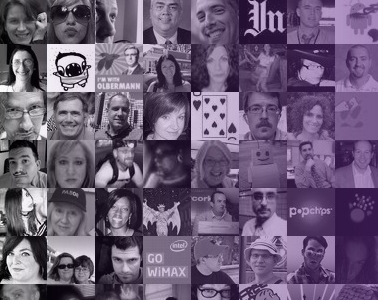
Picture of my Twitter People provided by Twilk: http://twilk.com/
By the way, I have a bunch of people who do social media well and are considered experts (because they have GREAT communities and are always very helpful!). Two famous ones come to mind right now: Chris Brogan and Don Lafferty. http://www.chrisbrogan.com/ and http://donaldlafferty.com/
A magazine editor with years of experience thinks works on the web are public domain!
Go over to HTLit and take a look. Feel free to follow their links to protest, too.
http://htlit.com/archives/November2010/CopyrightUproar.html
and here is yet more from NPR: