≡ Menu

Drawing anyway

Overcoming self-consciousness in Inktober

On his website, artist Jake Parker has a big heading that says:

ANYONE CAN DO INKTOBER,

JUST PICK UP A PEN AND START DRAWING.

-JAKE PARKER
a large black inkspot with the Inktober logo in it in white, set against a white background. There is a tiny "TM" next to the ink blot to note the Trademark. Owned by Jake Parker,

Mr. Parker started a “31 Days, 31 Drawings” campaign in October of 2009 to encourage him to develop “healthy drawing habits” (as per his website). I’m assuming that means drawing every day. Many writers believe in the myth that one must write every day to have good writing skills/habits. The Artist’s Way by Julia Cameron asks participants to commit to writing 3 pages of stream-of-consciousness writing daily for 90 days, long enough to form a habit of doing it. That actually worked for me; I did the 90 days and kept going. Eventually the 3 pages morphed into 1 large page, but the daily ritual stands. The habit is so ingrained that if I skip a day, it doesn’t toss me off the treadmill. I pick up the pen (and paper – it’s handwritten, an Artist’s Way strong suggestion) and get right back into it.

Perhaps that is the kind of habit kick-start Parker was after. Perhaps the drawing skills get rusty, like a foreign language, if you don’t use them. Parker invited others to participate. It grew a large following. Now thousands of people around the world follow Parker’s daily prompts by drawing a related ink-and-paper sketch and posting it to social media channels (Instagram being the most popular). Check out the hashtag #Inktober2019 for this years’ crop.

What originally was for ink, cartoon and graphic artists, soon grew to welcome any person with any level of skill. Indeed, the “most recent” column of an #Inktober hashtag search will undoubtedly bring up hysterically rudimentary drawings (but the “top” posts column can product break-taking images that hardly look done by human hands).

My drawing began in childhood, improved slightly by my teen years, and then just froze. I didn’t work on drawing as a skill or a craft again. Other pursuits grabbed my interest, like photography, sewing, papermaking, knitting and crochet. My time was spent in classes and reading books on those skills, never on drawing.

When I pick up the pen, I produce images that look exactly like my doodles in high school. This is what I mean by my skills bring frozen. It’s like a day hasn’t passed. I make the same lines, the same curves, and I always produce the same wacky proportions that drive me crazy.

I’m a big fan of the growth mindset. The growth mindset is the belief that one can improve their performance with education and practice. Instead of saying “I’m bad at math,” which is a strict dictum on the fate of one’s math ability, you would say, “I would like to practice at that, and with practice I will inevitably improve.” Time and effort leads to higher achievement. Simple concept. What makes it the growth mindset is applying it to any and all situations. When it comes to ability, hardly anything is fixed. My drawing ability can get better if I put effort into learning and practicing, just like I did with sewing or any other craft. The problem is, I’ve not been putting in that effort.

This is where Inktober and I (and embarrassment. Let’s not forget her) meet. You guys, most of my Inktober sketches are dreadful. I am haunted in particular of the drawing I did for the prompt “swing:”


a hand-drawn, basic and rudimentary sketch of two swing dancers
This is not what I pictured in my head.


This is terrible. Why? Because it does not match AT ALL what I had in my head. Sure, it may be better than what you could do, but when you have an idea but you don’t have the skills to bring it to fruition, that is a failure. It stinks. But I had to post it anyway because that is all I had, and I couldn’t spend any more time on it.

I know I could have done better, but that’s the difference between people who have skills and people who don’t: Skilled people can produce something decent in a short amount of time. Unskilled people may be able to produce something decent, but it may take then 43 stops and starts and 3 days to do it. That’s where I am. If I produce something passable, you can be sure I’ve spent too much time doing it, AND it isn’t close to the vision I started with.

It is not like me to post my craft failures. But Inktober isn’t about perfection; in fact for me it is a lesson about imperfection. My growth mindset here is about learning to live with putting art out there that people will think is basic, dumb, pathetic or worse. It’s important that I keep drawing and posting, no matter how bad the drawings are, because I need to learn this lesson. My fiction writing is never going to be perfect, but I keep struggling with it, hoping to feel better about it before I send it out. (Maybe after this Blogtober I should post some flash fiction every day. The “every day” obligation precludes perfectionism).

If you want to follow along, find me on Instagram as purplecar_cc. With each post I try to tell a little story as to why I chose that particular interpretation of the prompt. It’s super embarrassing for me, but I’m doing it anyway. And with anything in life, probably that’s the point.

0 comments

Tarot for fiction writers

A card game for storytellers

a scattered deck of colorful tarot cards with faces up against a black background
Many different tarot decks exist

All forms of occult soothsaying are fake. If we could predict the future, we’d all be Nate Silver of 538 and as rich as Bill Gates. But if you believe tarot is helpful or evil, that’s up to you. I think the 78 cards in the deck are merely storytelling tools. Indeed, many different professionals, like psychotherapists and marketers, find them to be helpful for getting people past blocks and thinking more creatively. Although I have yet to use them regularly in my writing, I can see tarot’s potential to be a very helpful tool for fiction creators.

At some point in my writing life, I’d stumbled upon a book written exactly toward this use. Tarot for Writers by Corrine Kenner is a book that claims it will help you “explore your creative potential” by learning how to use tarot. From the blurb:

Tarot for Writers will guide you through each stage of the creative process, from fleshing out a premise to promoting a finished work. Enhance your storytelling technique through over 500 enjoyable writing prompts, exploratory games …, tarot journaling, and other idea-stimulating activities that call upon the archetypal imagery and multi-layered symbolism in the tarot.

-Tarot for Writers

I checked Tarot for Writers out of the library. When it came time to return it, I bought a copy. I’ve only perused the book and have completed only one or two of the exercises, but from what I’ve seen I can gather the concept is good: Tarot cards jump start brainstorming sessions. Many creatives use tarot in this (non-religious) way, including marketing professionals and artists.

Inspired by the book, I bought a Rider-Waite-Smith deck and took an adult school class on tarot. The class was centered around using tarot in more in line with its “occult” use of prediction and soothsaying. Nevertheless, I participated and tried to learn the art of reading tarot for others.

Psychology side note: Tarot and other things like palm-reading seem to work at guessing correctly at a seeker’s facts and circumstances. This is called “Illusory Correlation” and it is the result of the brain’s natural tendency to find connections and patterns.

-science to the rescue

For you fans of strange out there, I will say this: the major arcana cards dominate any spread done for me. These “face cards” come up more than I would predict is normal when I read tarot for others, but the major arcana cards were overwhelmingly present for any spreads done for me. The staid tarot class teacher, a seasoned professional who makes a living reading tarot for CEOs, Wall Street execs et al., was so moved by the phenomenon that she felt the need to make a comment. At the “tarot for marketers” event I attended last night, 2 of the 3 cards in the spread – deck held and owned by me but cards pulled at random by others – came out as major arcana cards. The major arcana cards, 21 of the 78 cards in the deck, are not rare but they hold much more clear and forceful significance, usually, than the regular deck cards. Imagine if, every time (or almost every time) someone asked you to draw a card from a players’ 52-card deck, you pulled a Jack, Queen or King. That would begin to strike you as odd, right? That’s where I am with the major arcana cards. So that’s a little tidbit for you tarot fans to chew on. Tweet me if you are struck with any insights about it.

Writers and artists of all kinds are challenged to generate new storylines. Each person has their own unique ways of coming up with ideas, e.g. a walk down city streets, numerous roller coaster rides, or cooking meals for strangers. Inspiration lurks in odd places. The tarot, with its ins and outs, ups and downs, weird juxtapositions and seemingly eerie coincidences, harbors all sorts of inspiration for any artist who is willing to look.

Photo by Melanie Ruhwedel on Pixabay
0 comments

Tarot for writing

Creating content, with a (not really) spooky twist

Header for the MeetUp Meeting with the title "In the Cards: Using Tarot to Guide Your Content Projects"

Last night I attended a Philly Content Strategy meeting where we used the storytelling of Tarot cards to build content campaigns.

Content Strategist and Tarot enthusiast Jess Ryan broke us into groups to devise campaigns for different products. My group was tasked with coming up with a story line for a mindfulness app’s new landing page and newly-available lifetime subscription. We had a big group, so we didn’t get the whole campaign together, but the drawing of just three cards really got the ideas spinning.

As any content creator (or creative director) knows, coming up with ideas is HARD. When you do it day after day, sometimes your creativity abandons you. Your brain falls back on the same stories over and over. You begin to hear the same responses in the creative room, too.

“We did that topic two weeks ago.”
“We already wrote a blog post on that in Dec. 2017.”
“You always go straight for the harried mother trope.”

Ms. Ryan knows the grind. She’s a content creator herself. Right now I only write copy, but people like Ms. Ryan often work for an agency and are tasked with coming up with artwork, animation, taglines, logos, art direction, copy and more. After that’s all done, some are even responsible for finding placement in local and national advertising outlets.

All of these obligations can tax the already spread-thin creative brain. Enter Tarot, a card game (yes it started as just a card game), that is rich with character development, plot, challenges, emotions and any other part of a human’s story. Each card (of 78 cards in the Rider-Waite-Smith deck, the common deck used in Tarot readings) carries with it its own character, meaning and action. It also has an alternate interpretation in what are called “reversals” – different (not exactly opposite) meanings to be used when the card is drawn upside-down.

Sometimes one only needs a tiny bit of light to break the darkness. The Tarot offers thousands of idea sparks. Just pulling one card can chase away the dread of a blank page.

Our layout assigned to us for the mindfulness app campaign was a three-card spread: MIND BODY SPIRIT. 1 card would be pulled for each place in the spread. I brought out my deck (I have a deck. That’s a story for another time) and had 3 different team members pull a random card. We paid attention to how the card was oriented when it came out of the deck – upside right or upside down.

a medieval white male servant in plain clothes is struggling to contain a bundle of large, straight branches that tower over his head. Set against a blue sky.
Ten of Wands

The first place on our spread was designated to “MIND.” The next card we pulled would be used to address our customer’s state of mind. We pulled the Ten of Wands. Ms. Ryan gave us an app called Mystic Mondays, a Tarot app that holds extended explanations of the cards and their reversals. We looked up the Ten of Wands. Mr. 10 0′ Sticks came up right-side-up, so we looked for his standard meaning. The app has a LOT of info. To make it short, we picked out two phrases we thought could help us design the story funnel for our mindfulness app customer: “unburden yourself” and “you’re not in this alone.”

A naked white woman with bared breasts, holding two batons out to her sides. She is floating in air and a drape swirls around her and covers her genitals. She is framed by a large laurel wreath
The World

The second place in the spread was “BODY.” This would address the customer’s physical habits and behaviors. We pulled a “major arcana” card (the “face cards” of the Tarot deck), The World. Our bodies are our worlds, right? Or at least our bodies are how we see and interact with the world. The World card came out of the deck upside-down, so we looked up both the standard and the reverse meanings. Standard meaning for this card centers around wholeness and unity. The reversal meaning concentrates on taking action to make things happen, to not give up on one’s goals even though the goals are taking a long time. As a group, we thought the reversal meaning was pretty significant to someone who may want to make an entire life change, not just some silly New Year’s Resolution that might disappear by February. Notice, too, how the reversal defined the customer “problem” or “need to be filled” more closely than the standard meaning. I have a bit of experience with Tarot (which I’ll explain later) and I find this to be consistent. The reversals are where the “sales funnels” are. That is where you’ll find the challenges people face.

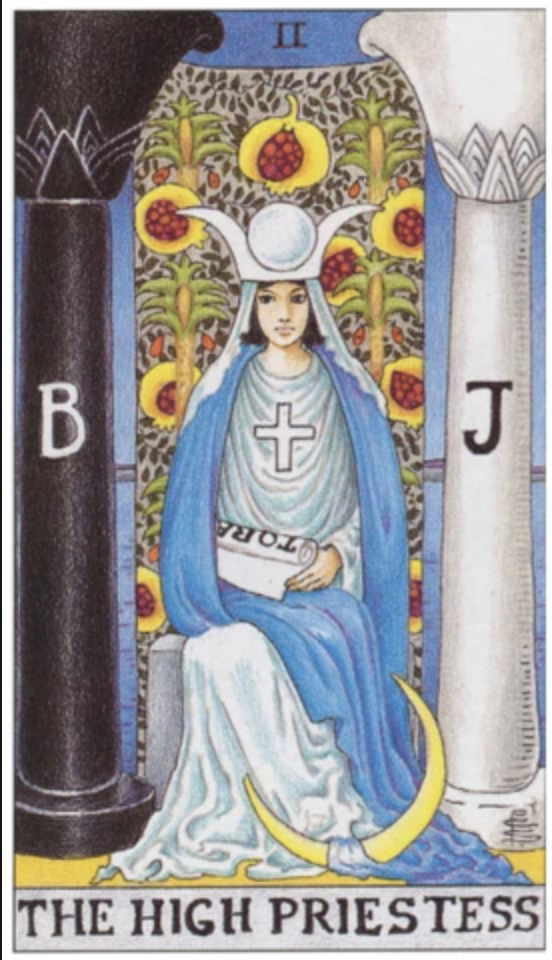
A white woman with dark hair sits on a religious throne surrounded by draperies and many religious symbols of every major world religion. She holds a scroll. There is a black column to her right emblazoned with a B and a white column to her left emblazoned with a J.
The High Priestess

The third and last place in the spread was “SPIRIT.” Like the rock-n-roll creative DIVAS that we are, we pulled The High Priestess. Here is where some controversy struck – we had some disagreement on whether or not the card came up in reverse. But because the reversal meanings are where all the “tea” resides, we looked up both the standard and reverse meanings of this awesome, female energy card. The upside phrases we picked out are “inner voice,” “serenity” and “Look inside you” for “expanding intuition.” The reversal, and where the problems for the customer really hide, had phrases like “imbalance,” “2nd guessing,” and you’re never “too busy” for “wisdom.” A big meaning that came from The High Priestess card was “get in touch with your higher self.”

All in all, I think our spread ROCKED. It is chock full of ideas for a mindfulness app’s storyline. There were tons of “pain points” a marketer could use to sell a lifetime subscription to the app in these three cards alone.

The night wrapped up quickly but the lessons lingered. I downloaded the Mystic Mondays app today. It may prove very useful indeed. At a later date I’ll expand a bit on what I know about Tarot and how the major arcana cards tend to follow me around (including last night: 2 out of 3 cards Major Arcana). In the meantime, check out Tarot for sparking some creativity in your work. Sometimes all it takes to light a fire is a tiny spark, and with each Tarot card comes a bright world of story.

A white woman with dark hair sits on a religious throne surrounded by draperies and many religious symbols of every major world religion. She holds a scroll. There is a black column to her right emblazoned with a B and a white column to her left emblazoned with a J. 1 comment

Games don’t stick

PokémonGo and WizardsUnite slip out of sight

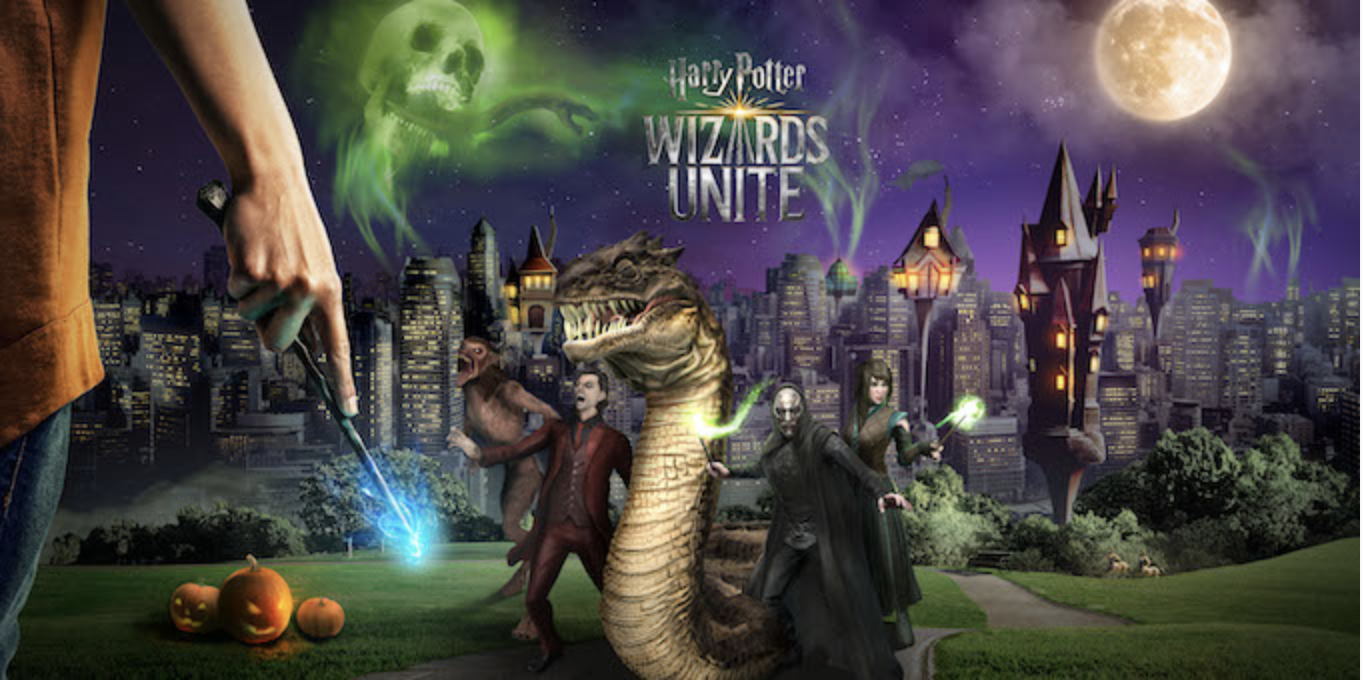
a branded drawn scene of Harry Potter world characters - a promo for an online event for the game

I started both PokémonGo and Wizards Unite with enthusiasm. I play daily for weeks. I primp my avatar. I collect treasures. I meet with fellow players to take down bosses and I join related groups online.

Weeks can turn into months. In PG I got to Level 33 and in WU, Level 28.

But then something happens. Some mysterious malaise sets in and my interest falls off a cliff. PG still has a place on my phone but I don’t use it, and my WU is officially active all but abandoned.

I have to say, it isn’t always a mystery as to why I stop playing. With PG, I know exactly when and why I quit. I’d been meeting up with raid groups to take down some big bosses. Afterward, I was not able to capture the boss pokémons for my collection like other raiders could. One day after yet another raid and yet another miss, I grew frustrated and quit. All the joy of the game disappeared and overnight, I was done. The people I’d been meeting were too random and varied for me to get to know any of them, so no-one missed my absence at the following raids.

With WU, boredom has been growing in the last several weeks. Then one day in September I got a warning that I was running out of allotted data for the month (rare). I shut down all unnecessary data usage. Those few days of not checking on WU while I was out and about was enough to break my habit. I’ve been stuck on Level 28 now for weeks. I’d usually progress through levels in a few days.

If I had friends nearby who played either game AND if those friends could make regular outings with me, perhaps I’d keep up. I just don’t have the identity investment to trudge through my boredom. Niantic (maker of both games) realizes players get bored and at times offer events to rekindle interest. A “Dark Magic” event is coming up in WU soon. I enjoyed previous events but as the days go by, I get further and further away from wanting to participate.

I’m sad about it. I delighted in both games when they were first released. I don’t know how to keep that enthusiasm. No friends are coming out of the PG or WU ether to play with. It’s just the same things to catch (in the game) and same lonely pursuit over and over. I do have solo hobbies, like sewing, knitting and paper crafts. But they contain actual human interaction on a regular basis. Almost all of my sewing projects have some sort of social tie. I’ve been going to a knitting group on Fridays, and I joined a pen pal group this year with whom I exchange paper crafts and fun letters, etc. The meaning of any pursuit, for me, is not found solely in personal satisfaction but also in connection with others. These games don’t really connect me to anyone.

It does seem that PG, since its reboot, has gathered a lot of new participants. I could dive in again but I don’t see the point. My interest will probably fade again because there will never be a solid community around the game.

PG I could leave easily, as I was never a PG fan, but WU I really like because I’ve been a Harry Potter fan since the first book came out. My interest is fading fast, and that is a bummer. I want to stay with it because I love the extended universe.

On the plus side, not playing the game will give me more time for other things. Maybe a few months’ distraction is the point of these types of games. Perhaps now I can move on, and eventually become distracted by the next shiny thing. We’ll see.


0 comments

Deciding to be better…

… at crosswords. And other things

screen shot of the crossword icon. Under the icon there is a notification that says "You're on a 25 day streak! KEEP IT GOING."

Something weird happened to me on the way to the Forum.

The Forum in this case is the (infamous) NYT Crossword Puzzle. The NYT Crossword and 3 sudoku puzzles are part of my morning routine. My early-day brain likes to solve some problems before it tackles the day. It’s a habit of unknown origin.

Until around March or April 2019, I could reliably finish only the Monday (easiest) crossword sans help. As the rest of the week’s crosswords became increasingly harder, I would have extra browser tabs open to Wikipedia, IMDB Merriam-Webster, DuckDuckGo and Google.

Looking up the exact answer on crossword solver sites is verboten; my rule is the answer must be found online in its own context. Rivers are located on maps, team names are found on sports sites, etc. Wikipedia is a last resort. My crossword solving practice is as much about honing internet search skills as it is about waking up my brain. Hence, I don’t see looking up answers on non-crossword-solver sites as “cheating.” I use the tool to build better skills and I’m not competing with anyone.

But even with scouring the internet (which btw I’ve been quite good at for decades), after Wednesday I rarely completed a puzzle on my own; I’ve needed the NYT app to reveal the answer. One square would stump me on Thursday, or two on Friday, or maybe five or six on Saturday (the hardest puzzle). I never had longer than a two- or three-day streak.

Until one day, when everything changed.

Sometime in the beginning of 2019, I noticed I was becoming increasingly annoyed upon discovering the answers that stumped me. “Ugh,” I’d think. “I knew that.” I’d be figuratively kicking myself. This annoyance was a new thing, and it grew with each passing puzzle.

When I started on the NYT puzzles, I assumed I would not be able to finish them, as the puzzle is one of the most difficult in main stream newspapers. After a few years, the Monday puzzles became easier and I would be delighted to have solved them. I kept solving. I kept getting better. But I never noticed.

Back to early 2019. After kicking myself every day for several weeks, I decided to not give up so easily on the last square or two that stumped me. On April 7, 2019, I decided I was going to sit and think about hard clues before I turned to the “Reveal Puzzle” button. I would do what I had to do to crack the code. If I had to do some more internet sleuthing, if I had to sit and stare, if I had to pick through charts of sports stats from the last 100 years, I was going to find the dang answers.

Beginning on that day, I went on a 25-day streak of perfectly-solved puzzles.

It was an odd feeling. Suddenly I had to change my view of myself. I was a better internet/searcher-NYTcrossworder than I’d thought. Who was this person who could just decide to finish puzzles?

“Jeez,” I thought. “What else works like this? Could I just decide to not have anxiety? Could I just decide to be a better eater and exerciser?”

The terrifying answer was “Yes.” Sure, habits are ingrained pathways in the brain and etched memory in the muscles, but big parts of our identity are a choice. Seeing myself as a novice crossword solver was appropriate for when I first started. Over time, though, that image became incongruous with the facts. I had moved up intermediate level, but I clung to that novice identity.

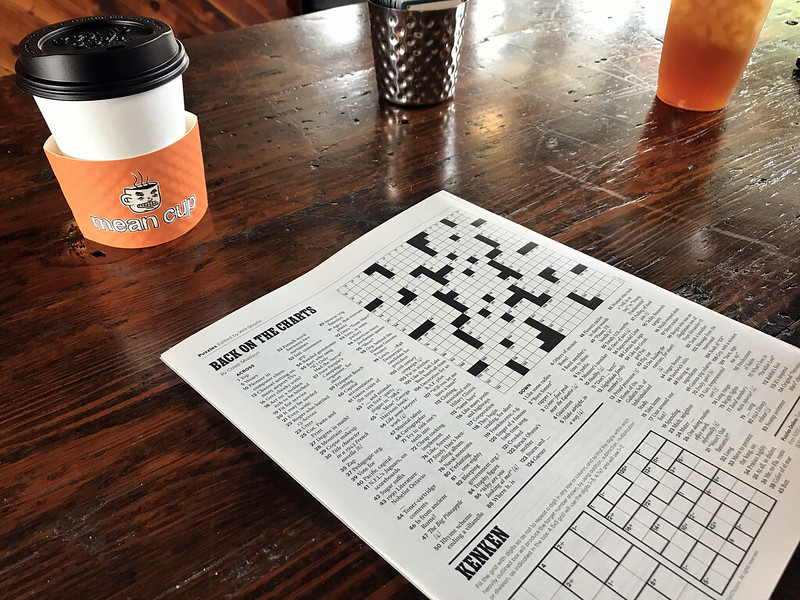
a newspaper opened to the crossword on a wood table in a cafe

Let’s take a second to notice how my change worked. It went through common steps of identity shift:

  1. Start as a beginner
  2. Practice
  3. Get better
  4. Become more confident in your skills
  5. Take on increasingly difficult challenges

I got stuck between steps 3 & 4. I was in a holding pattern. I got better, and I did notice that I was filling in more and more squares as the week went on, but I still saw myself as “just learning.” Seeing myself as a beginner allowed me to give up easily on the puzzles. They were hard! Right?

When the annoyance set in, my habits got disrupted. Faced with new information, i.e., the revealed answers were not so esoteric that I couldn’t figure them out, my identity struggled. I couldn’t justify giving up so easily on the puzzles. It was laziness.

The wave of dissatisfaction was enough to topple the boat. I decided to work harder to solve the puzzles so as to stop kicking myself over missed clues. I passed step 4 and went on to step 5.

25 days later, I sat and stared at the notification. A 25-day streak. All solved. I took a screenshot and carried on. I kept the streak going for several days after that until I realized I didn’t need to spend so much time on the puzzles. My transformation was complete. No longer was I someone who would always be stumped by the NYT crossword. I was someone who could solve it if she wanted to. I casually and without concern broke the streak sometime in the 30s.

That, my friends, is what is called a “paradigm shift.” I went from believing one framework to another: I am not a solver -> I am a solver. But this wasn’t just a shift in nerd identity. It was also a shift in my thoughts on change.

I’m an avid reader of pop psych and self-help books. I regularly visit the subreddit r/DecidingtobeBetter. Finding ways to grow and live more freely has been a major pursuit of mine since I was a girl. I’d experienced sudden changes-of-heart before, but none were so consciously built. This little crossword decision and its resulting 25-day streak rocked my world. It changed how I think about change.

Listen. The whole Tony Robbins “change your life in a second!” stuff is crap. True, lasting change takes practice. I didn’t reach my “I’m an NYT puzzle solver” state until after many years of struggling with the puzzle, a few months of specific annoyance, then almost a month’s worth of practice in the new role. It’s easy to see the tip of the iceberg and not its massive base floating underneath.

What I’m saying is, change happens pretty much the same way every time: Status Quo -> Discomfort -> Response to Discomfort. Often we can’t influence the first two states. They happen without our input and/or conscious knowledge. But we have a LOT more sway over that last state. How we see ourselves will dictate how we respond. You are allowed to set your own rules. Those rules won’t always mix well with what society imposes, but there’s a whole world of wiggle room in there. You get to decide who you are to yourself.

Whether it’s a random day in May or the start of the New Year, take some stock in your current state. Probably somewhere you’ve built skills you have yet to acknowledge. Perhaps it’s time to dive in and claim that victory.

Coffee and Crossword by waffleboy on Flickr
Ocean scene by Alexandra Bellink on Flickr

ads

woman in an above-knee green dress facing the ocean. Her back is to us, her right arm is raised in a wave, and she is standing in the surf up to her knees 0 comments