≡ Menu

Deciding to be better…

… at crosswords. And other things

screen shot of the crossword icon. Under the icon there is a notification that says "You're on a 25 day streak! KEEP IT GOING."

Something weird happened to me on the way to the Forum.

The Forum in this case is the (infamous) NYT Crossword Puzzle. The NYT Crossword and 3 sudoku puzzles are part of my morning routine. My early-day brain likes to solve some problems before it tackles the day. It’s a habit of unknown origin.

Until around March or April 2019, I could reliably finish only the Monday (easiest) crossword sans help. As the rest of the week’s crosswords became increasingly harder, I would have extra browser tabs open to Wikipedia, IMDB Merriam-Webster, DuckDuckGo and Google.

Looking up the exact answer on crossword solver sites is verboten; my rule is the answer must be found online in its own context. Rivers are located on maps, team names are found on sports sites, etc. Wikipedia is a last resort. My crossword solving practice is as much about honing internet search skills as it is about waking up my brain. Hence, I don’t see looking up answers on non-crossword-solver sites as “cheating.” I use the tool to build better skills and I’m not competing with anyone.

But even with scouring the internet (which btw I’ve been quite good at for decades), after Wednesday I rarely completed a puzzle on my own; I’ve needed the NYT app to reveal the answer. One square would stump me on Thursday, or two on Friday, or maybe five or six on Saturday (the hardest puzzle). I never had longer than a two- or three-day streak.

Until one day, when everything changed.

Sometime in the beginning of 2019, I noticed I was becoming increasingly annoyed upon discovering the answers that stumped me. “Ugh,” I’d think. “I knew that.” I’d be figuratively kicking myself. This annoyance was a new thing, and it grew with each passing puzzle.

When I started on the NYT puzzles, I assumed I would not be able to finish them, as the puzzle is one of the most difficult in main stream newspapers. After a few years, the Monday puzzles became easier and I would be delighted to have solved them. I kept solving. I kept getting better. But I never noticed.

Back to early 2019. After kicking myself every day for several weeks, I decided to not give up so easily on the last square or two that stumped me. On April 7, 2019, I decided I was going to sit and think about hard clues before I turned to the “Reveal Puzzle” button. I would do what I had to do to crack the code. If I had to do some more internet sleuthing, if I had to sit and stare, if I had to pick through charts of sports stats from the last 100 years, I was going to find the dang answers.

Beginning on that day, I went on a 25-day streak of perfectly-solved puzzles.

It was an odd feeling. Suddenly I had to change my view of myself. I was a better internet/searcher-NYTcrossworder than I’d thought. Who was this person who could just decide to finish puzzles?

“Jeez,” I thought. “What else works like this? Could I just decide to not have anxiety? Could I just decide to be a better eater and exerciser?”

The terrifying answer was “Yes.” Sure, habits are ingrained pathways in the brain and etched memory in the muscles, but big parts of our identity are a choice. Seeing myself as a novice crossword solver was appropriate for when I first started. Over time, though, that image became incongruous with the facts. I had moved up intermediate level, but I clung to that novice identity.
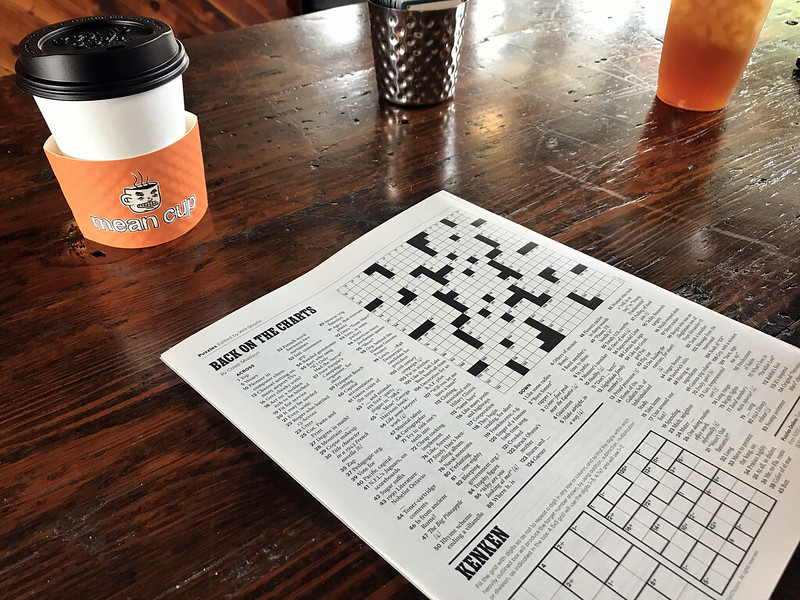
a newspaper opened to the crossword on a wood table in a cafe

Let’s take a second to notice how my change worked. It went through common steps of identity shift:

  1. Start as a beginner
  2. Practice
  3. Get better
  4. Become more confident in your skills
  5. Take on increasingly difficult challenges

I got stuck between steps 3 & 4. I was in a holding pattern. I got better, and I did notice that I was filling in more and more squares as the week went on, but I still saw myself as “just learning.” Seeing myself as a beginner allowed me to give up easily on the puzzles. They were hard! Right?

When the annoyance set in, my habits got disrupted. Faced with new information, i.e., the revealed answers were not so esoteric that I couldn’t figure them out, my identity struggled. I couldn’t justify giving up so easily on the puzzles. It was laziness.

The wave of dissatisfaction was enough to topple the boat. I decided to work harder to solve the puzzles so as to stop kicking myself over missed clues. I passed step 4 and went on to step 5.

25 days later, I sat and stared at the notification. A 25-day streak. All solved. I took a screenshot and carried on. I kept the streak going for several days after that until I realized I didn’t need to spend so much time on the puzzles. My transformation was complete. No longer was I someone who would always be stumped by the NYT crossword. I was someone who could solve it if she wanted to. I casually and without concern broke the streak sometime in the 30s.

That, my friends, is what is called a “paradigm shift.” I went from believing one framework to another: I am not a solver -> I am a solver. But this wasn’t just a shift in nerd identity. It was also a shift in my thoughts on change.

I’m an avid reader of pop psych and self-help books. I regularly visit the subreddit r/DecidingtobeBetter. Finding ways to grow and live more freely has been a major pursuit of mine since I was a girl. I’d experienced sudden changes-of-heart before, but none were so consciously built. This little crossword decision and its resulting 25-day streak rocked my world. It changed how I think about change.

Listen. The whole Tony Robbins “change your life in a second!” stuff is crap. True, lasting change takes practice. I didn’t reach my “I’m an NYT puzzle solver” state until after many years of struggling with the puzzle, a few months of specific annoyance, then almost a month’s worth of practice in the new role. It’s easy to see the tip of the iceberg and not its massive base floating underneath.

What I’m saying is, change happens pretty much the same way every time: Status Quo -> Discomfort -> Response to Discomfort. Often we can’t influence the first two states. They happen without our input and/or conscious knowledge. But we have a LOT more sway over that last state. How we see ourselves will dictate how we respond. You are allowed to set your own rules. Those rules won’t always mix well with what society imposes, but there’s a whole world of wiggle room in there. You get to decide who you are to yourself.

Whether it’s a random day in May or the start of the New Year, take some stock in your current state. Probably somewhere you’ve built skills you have yet to acknowledge. Perhaps it’s time to dive in and claim that victory.

Coffee and Crossword by waffleboy on Flickr
Ocean scene by Alexandra Bellink on Flickr

ads

woman in an above-knee green dress facing the ocean. Her back is to us, her right arm is raised in a wave, and she is standing in the surf up to her knees 0 comments

“Speed listening” and Audiobooks

How to read a lot without even trying. Or understanding.

a narrow hallway filled to the brim with books, from floor to ceiling. Probably is a basement in a library. The books are piled haphazardly.

In 2015, The Atlantic reported on the phenomenon of speed listening in “entrepreneur circles” (i.e. goof balls looking for idiotic venture capital money). Speed listening is the act of experiencing the audio or dictated version of a book at a high rate of speed. Normal speech would be at a rate of 1x. Speed listening increases the rate to 1.25x, 1.5x or, for most listening apps, 2x. Yes, it makes the voice sound funny and the words go by comically fast, but the bad aural experience is simply a means to an ever-more-information-absorption end.

I read about 25-30 books every year. Some of these are paper books and some I listen to on audio (which yes, I also refer to as “reading.”) Unabridged versions and their latest copies are the only volumes I’ll take in. If I can’t find a full edition, I skip to the next book on my To-Be-Read pile and look for the full version at a later date. Often I will have both a copy of the hardcover book and a stream of the audiobook concurrently, and I switch back and forth between them.

When I was in a book club with other moms years ago, one woman took issue with my choice to listen to the month’s selection instead of reading the paperback copy. I had a small child at the time and the audiobook was super convenient, as I could listen leisurely as I pushed the stroller. I’d rewind and listen to passages again. I’d even slow down the rate of speed if I wanted to truly absorb the meaning of a paragraph, or to just bask in its beautiful construction. I didn’t think I was cheating anyone out of a reading or book club experience because I listened to the audiobook. Actually, I thought the audio performance was wonderful and added nuance. This woman argued that I did not have to “do as much work” in imagining the character’s voices or in sensing the tone of scenes. Perhaps she’s right. Perhaps listening to fiction audiobooks is more akin to seeing a play performed instead of reading the script. I didn’t feel like I missed anything, but I could tell the woman was more than a little miffed. (She may have thought of book club as more like homework-a-la-middle-school-Lit-class. I was just happy to be somewhere with adults discussing fiction!)

The Silicon Valley types in the 2015 Atlantic article were, on the whole, more interested in non-fiction. I also read (and, OK, LISTEN TO) many non-fiction books yearly. I’ve tried listening to them at accelerated rates, but my brain doesn’t really like it. A 1.25x speed is OK for a particularly slow talker but otherwise I keep the speed set at the default 1x rate. The unicorn-wannabes in San Fran may absorb info more quickly than I, but from what I’ve seen about learning, processing, comprehension, etc., I doubt it. For them, it seems the status of having-read-the-book is more important than having-learned-something-from-the-book.

Luckily, I have no-one to impress. No cutthroat water cooler chatter about the latest on Elon Musk. No latest GF Keto Brain Boost routine, or Raising Kids like A Start-Up (I almost wrote that book once). I read what I want, when I want. Another lucky thing: my non-fiction tastes usually coincide with a large cohort of technologists, scientists, and self-improvement junkies online. I get some traction for my blog and tweets by sharing my insights about the latest business books in my niche. (Indeed, almost every book I’ve reviewed on this site has elicited a comment or three from the author. I stopped reviewing business books and only tweet about them now. I guess I could go back to reviewing but I spend too much time reading to stop to write reviews!)

Granted, not all books are worthy audiobooks. Heck, some books are just bad in paper or audio form. I toss those back into the abyss after the first few chapters. But some great paper books are ruined by the voice artist. The Power of Habit by Charles Duhigg is a great book with an absolutely TERRIBLE reader. But there are other great books with audio versions that are destination experiences in themselves (Jim Dale’s performance of all the Harry Potter books is a must-listen).

As a freelancer who works alone at home, I spend a lot of my day in total silence save for the click click click of my keyboard. When I am cooking, hiking, walking the dog, doing laundry, etc., I don’t want more silence. Audiobooks (and sometimes podcasts) are often my companions. Sometimes I’ll work through one book at a time. Right now I have about 3 different ones to choose from. I have small piles of paper books all over my house, too, waiting for a moment with a cup of tea.

As you can guess, I don’t watch that much TV. This isn’t a dis. Television storytelling has come a long way and there are many worthy shows. I watch some. But if I can’t stream it at will, I probably won’t see it. Books are more easily accessible, and, frankly, are more relevant to my two worlds of fiction and non-fiction writing.

I won’t be speeding listening, though, no matter how many books I want to read or how many cool TV shows tempt me away. I read to learn, to be entertained, to escape to other worlds, to stimulate my brain. Some things are better done at a regular pace.

Image by Free-Photos from Pixabay
0 comments

Strong is the new pretty

Moving away from shallow standards of beauty.

black and white photo of a preteen female athlete in a swim suit, swim cap, goggles and a race number pinned to her suit.
“First Triathlon” Copyright Kate T. Parker

I came across the phrase “Strong is the new pretty” last week. It’s the book title of a photography series by Kate T. Parker, which captures girls in sporty, messy shows of power. From the blurb:

Real beauty isn’t about being a certain size, acting a certain way, wearing the right clothes, or having your hair done (or even brushed). Real beauty is about being your authentic self and owning it. Kate T. Parker is a professional photographer who finds the real beauty in girls, capturing it for all the world to see in candid and arresting images.

-Kate T. Parker Strong is the New Pretty
Picture of 70-something white female model with white short hair on the top of a building in a city with the skyline behind her.
Maye Musk

The book took off, probably fueled by such a great title. I myself have been looking for a new pretty. Beauty seems inextricably tied to youth in this culture, and I am no longer young. I search for role models like Maye Musk and Iris Apfel. Stunning grace and outrageous style, respectively, are their new pretties.

I want “strong” to be mine. I want to embrace the ugly and move on to being satisfied (enough) with my progress as a writer. While leaving the house in yoga pants (unless I’m going to yoga) may never be on the agenda, I have emerged sans makeup more times in the last 6 months than all times put together since my first corporate jobs in my 20s. (I rarely if ever wore makeup in college or in the academic research labs I worked in directly after.) It feels strange to be bare-faced but it helps to imagine I’m invisible like the older women told me I’d become. Instead of blending my makeup, I blend into the crowd.

People can’t see your inner strength just by looking at you. They can’t see your talent or your empathy or your capacity to love deeply. Strength and fortitude, confidence and creativity are the true beauty marks.

0 comments

Accepting the ugly

crackled sepia pencil sketch picture of a woman's bare back and butt looking into a hand held square mirror where we can see only her face

Remember those glorious stay-up-til-wee-hours phone calls with friends where you’d talk about anything and everything or just literally sit there while you played your own video games or went about your day? It was sometimes just comforting to hear them breathe.

Few and far between those calls are these days (but Facebook and other tech co’s are coming out with video hardware for this), but I just was lucky enough to stay up until 3 am chatting with a long distance friend. Unlike back in the old days when the phone lines (and maybe a fax if you were fancy) were the only media, our conversation was aided by Facebook messenger, texting and hyperlinks.

When the conversation came around to beauty (and my issues with it, which maybe I’ll blog about another time), my friend sent me this quote pic on Facebook (hover to read Alt text):

the first step towards confidence is not being afraid to be ugly

once you get over the fear of being unattractive and stop equating beauty with other good things in life (friends, love, happiness) it's a lot easier to love yourself unconditionally

your job is not to sit around and be pretty easy on everyone else's eyes

your job is to do whatever the fuck you want and look however the fuck you want while doing it 

pinkspotlight
A search for the original source “pinkspotlight” didn’t turn up any hits.

In my 2:30 a.m. giddy haze, this wisdom dropped on me like a ton of bricks. So many years I’ve been told about the Buddhist concept of acceptance, been exposed to the concept of “radical acceptance” and have read tomes about optimism, realism etc. etc. and none of it was so succinctly said.

The beauty of this quote (see what I did there?) is that it is applicable to any situation. Don’t be afraid to be a bad writer. Don’t be afraid of being under-qualified for that job. Stop equating perfection with good enough, and know that good enough is MORE than enough to get the job done.

I had another lovely conversation with a friend today. We took a brisk morning (decent hours!) walk for exercise and touching base. We talked about the concept of feeling safe. Both she and I are freelancers, and whew, Fam. Freelancing ain’t for the weak. Referencing this quote, I suggested, what if we just accept that we are not safe? What if we start with the idea that the world is NOT A SAFE PLACE? Would that put our paralyzing fear in perspective? You know. Maybe. Acceptance does some crazy things.

This is, for me, another step to confidence in writing fiction.

What are you going to accept?

Image by JL G from Pixabay
1 comment

Stealthily blogging about nothing

Or, how I can write a lot but say very little.

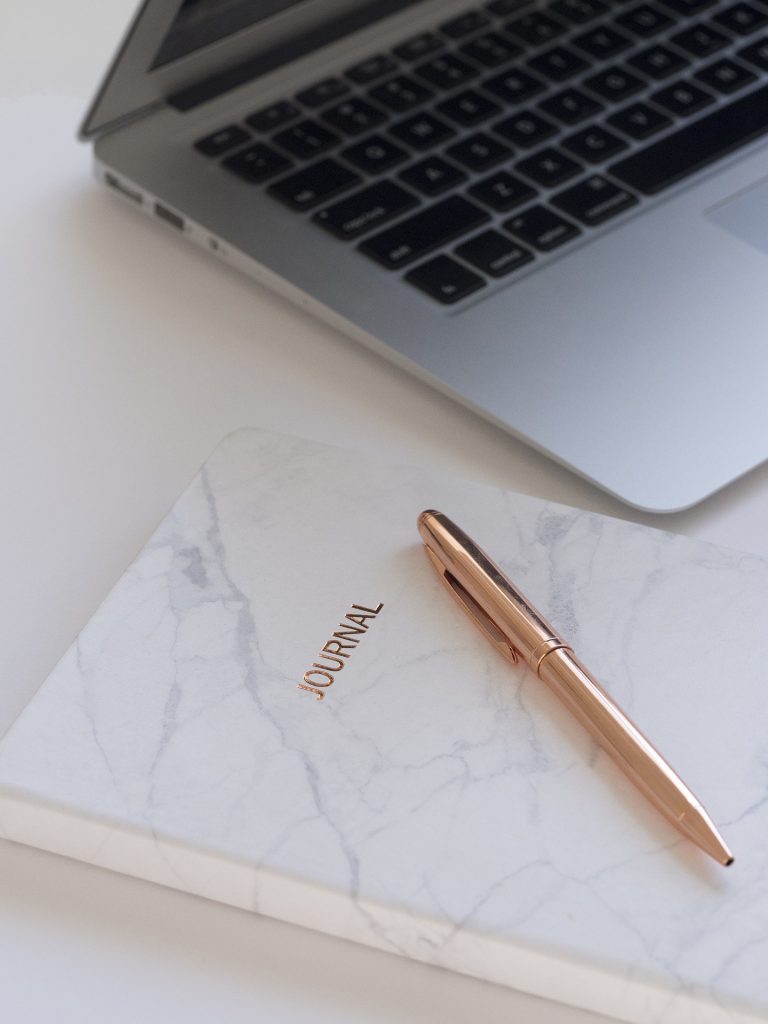
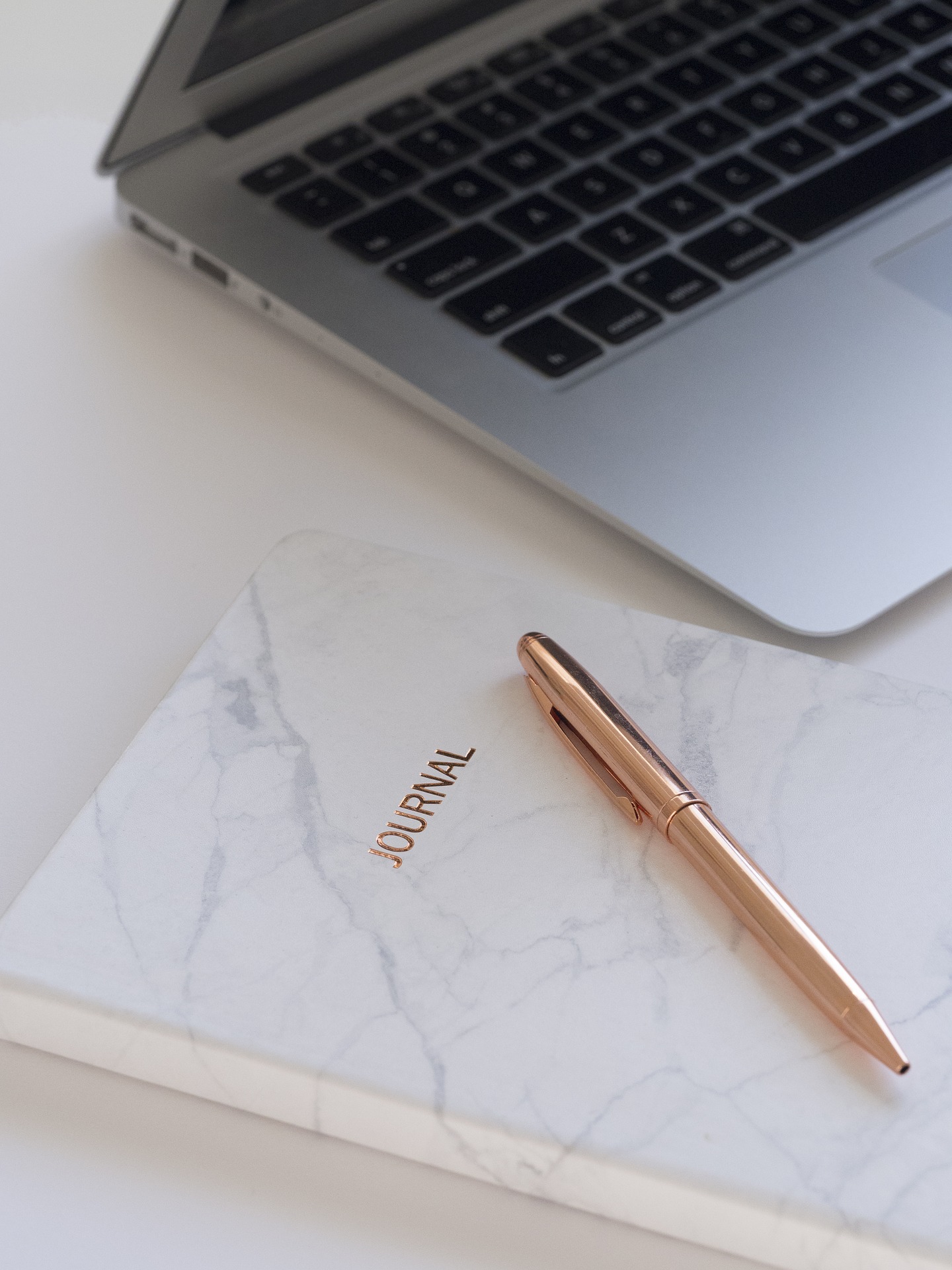
A mostly white page with a marbled cover journal, a gold pen atop it, and a corner of a laptop above them

Blogging started as “web logging,” i.e. writing a personal diary on the internet. Merriam-Webster has “blog” defined as “an online personal journal with reflections, comments, and often hyperlinks, videos, and photos provided by the writer. From: Weblog. First known use 1999.” I started this blog in 2004, in the beginning of the boom.

But I also kept a pen-and-paper journal and still do. I try to write at least one full page every day. Journaling was a very intermittent practice for me until I came upon Julia Cameron’s The Artist’s Way. In working through that book, I fulfilled its requirement of writing 3 pages of stream-of-consciousness each and every day for 90 days. The point oof that exercise is to create a daily writing habit and to let go of one’s inner editor. I did the 90 days and kept on. That was at least 7 years ago. Now I rarely skip a weekday and often write on weekends, too. I’ve changed the requirement from 3 pages to 1 page (minimum). My journal (no-one calls them “diaries” anymore) is a repository for all my anger and frustrations. It helps me to be a more pleasant person.

Blogs were accessible most easily by a web browser. Blogging’s popularity grew as web browsers did. Soon mainstream media began trawling blogs for publishable content. The personal essay boom was born. People, mostly women, were being paid to tell their most heinous and personal stories for clicks (and sometimes ~very little~ money). 

Not once have I worked any of the journal pages into a personal essay for mainstream media. I’m sure I could sell some pieces. I’ve thought about it. At the end of the day, the trust of the people around me and my desire to avoid backlash keep me from doing it.

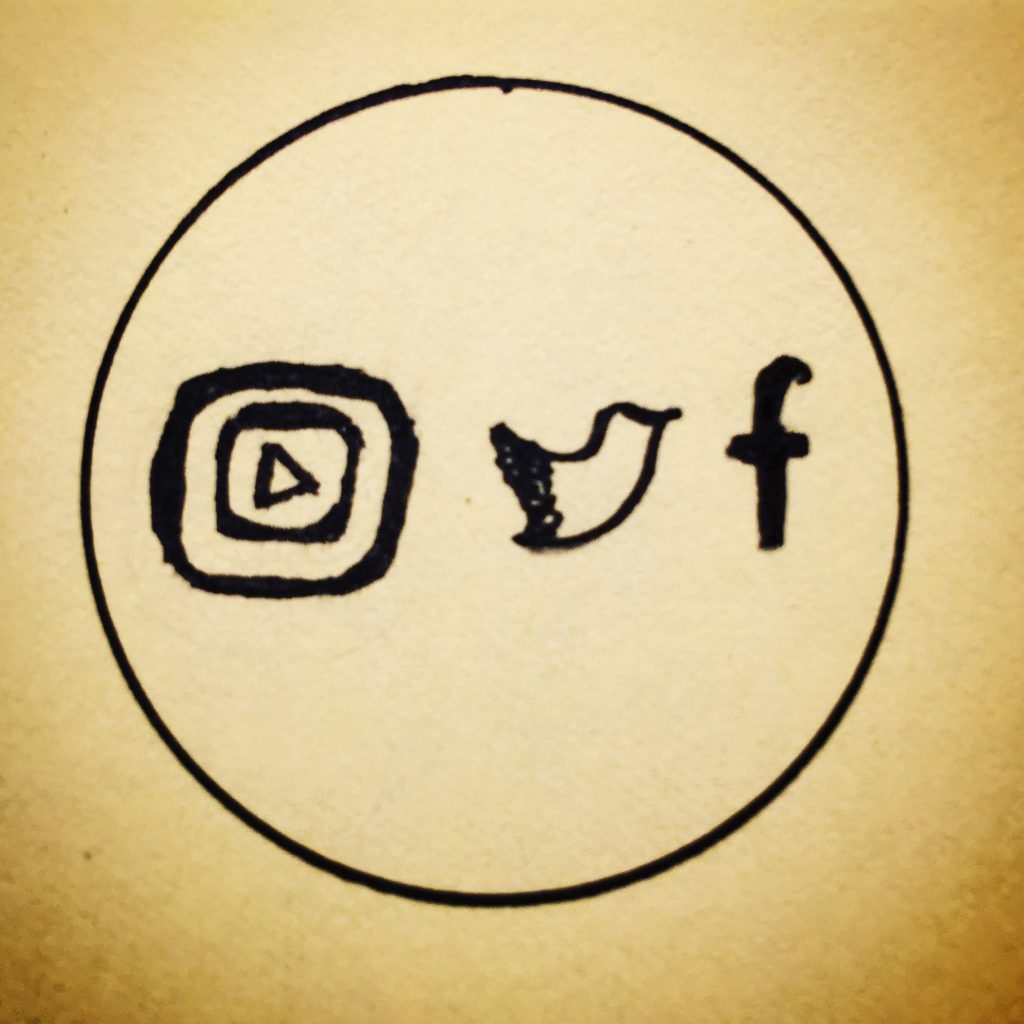
“What about Twitter, Facebook, etc?” you may ask. True, I do post quite a bit on social sharing sites, but those posts are short and they fly by, soon lost in the deluge of sputterings from everyone else on the planet. They’re disregarded like crappy fortunes from stale cookies. Media sites like Buzzfeed aren’t so disposable. The internet is forever, as they say. Having a piece follow me around after I’ve grown past it sounds like a nightmare. Tweets do come back to haunt once in a while, but it seems the zeitgeist is more willing to forget them than an essay plastered on a big news site. Plus, I don’t tweet much of substance. Facebook and Twitter for me are love-hate entities. They provide me with much-wanted human interaction but also bait me into skirmishes and lead me down rabbit holes. (For Inktober’s prompt today, “Bait,” I drew their logos along with YouTube’s). 

a black ink circle with hand drawn logs of youtube, twitter and facebook

My reluctance to share any “real deal” stuff is based in my love of privacy, something of which I had very little growing up. Blogging daily, even for a month, is a challenge to that preference. Each time I blog I am reminded of the backlash against women for their personal essays, or how inadvertent branding can dog a person for a long time. I’m not a fan of those prospects. So I write about myself without really writing much. I try to add value. Sometimes. Most of the time. But I try to do it without directly talking about my family, my politics or my preferences. 

Blogging daily (something I’ve never done for more than a week) is bound to produce some less-than-valuable posts, perhaps posts more akin to the throw-away thoughts on Twitter. I’ll do my best to avoid that, but the point of #Blogtober doesn’t seem to be value as much as volume. So volume it is. I’ll try to make the reads worth it. You never know. I may slip and reveal a personal factoid in my rush. A reader can only hope. 

Image by Jess Watters from Pixabay
Image by Christine Cavalier
A mostly white page with a marbled cover journal, a gold pen atop it, and a corner of a laptop above them 0 comments