≡ Menu

Mail Art

Mail Art (see wikip. post) seems like a fun way to put your paper-and-words crafted art out into the world. I stumbled upon it as I was searching the web and Craigslist for some freelance/part time writing gigs.

It reminds me of PostSecret. Mail Art’s international aspect of sending paper art to projects around the world is exciting, too.

0 comments

Here’s my preliminary search results for novel excerpts that other writers/bloggers have posted. I’ll keep searching and let you know what I find. Please reply with any of your suggestions/favorites.

I haven’t checked these out yet, but they seem interesting:

An author named Charles Sheehan-Miles has an e-book and a podcast (which he calls “Podiocast”) you can check out. This post tells you how you can get your name in his next book.

Happiness’ Blog has a story up called MERLIN TO PARSIFAL – 1.

Read the comments below where the author tells you how to navigate the blog site and the “23rd Century Novel” there.

Poetis, a BlogHarbor blog (like PurpleCar!) seems to be nothing but novel posts. I can’t quite figure it out. But the voice and subject are interesting…

UPDATE April 16, 2007: Melanie Lynne Hauser’s: Jumble Pie

Not an e-book but seems interesting anyway:

Bookmark Now

Writing in Unreaderly Times: A Collection of All OriginalEssays from Today's (and Tomorrow's) Young Authors on the State of theArt --and the Art of the Hustle--in the Age of Information Overload

by Kevin Smokler
May 24, 2005
Paperback
ISBN: 9780465078448
ISBN-10: 0465078443
Published by
Basic Books

Description

An anthology of original essays from our most intriguing young writers, Bookmark Now
boldly addresses the significance of the production of literature in
the twenty-first century. Or simply, “How do we talk about writing and
reading in an age where they both seem almost quaint?”
The book features authors in their twenties and thirties-those raised
when TV, video games, and then the Internet supplanted books as
dominant cultural mediums-and their intent is to examine: (1) how this
generation came to writing as a calling, (2) what they see as
literature’s relevance when media consumption and competition have
reached unprecedented levels, and (3) how writing and reading fit in
with the rest of our rapid, multitasking world. The result will offer a
voyeuristic peek into the private, creative lives of today’s writers and
shed light on what their work means at a time when the book business is
changing, yet-almost paradoxically-a time when storytelling as a means
of both self-realization and community building (be it via e-mail,
weblogs, or “This American Life”) seems more relevant than ever before.
Edited by Kevin Smokler, a Bay Area entrepreneur who has devoted
himself to fostering literary culture and cultivating fresh talent, Bookmark Now is a collection that both captures the state of the art and provides inspiration to aspiring writers at all levels.

0 comments

Modern Gothic Fiction

The Gothic Novel outlines the conventions typical of the genre. A current mainstream fiction market example of this is Diane Setterfield’s The 13th Tale. Here’s the review from Publisher’s Weekly, posted on Amazon.com:

From Publishers Weekly
Former academic Setterfield pays
tribute in her debut to Brontë and du Maurier heroines: a plain girl
gets wrapped up in a dark, haunted ruin of a house, which guards family
secrets that are not hers and that she must discover at her peril.
Margaret Lea, a London bookseller’s daughter, has written an obscure
biography that suggests deep understanding of siblings. She is
contacted by renowned aging author Vida Winter, who finally wishes to
tell her own, long-hidden, life story. Margaret travels to Yorkshire,
where she interviews the dying writer, walks the remains of her estate
at Angelfield and tries to verify the old woman’s tale of a governess,
a ghost and more than one abandoned baby. With the aid of colorful
Aurelius Love, Margaret puzzles out generations of Angelfield:
destructive Uncle Charlie; his elusive sister, Isabelle; their unhappy
parents; Isabelle’s twin daughters, Adeline and Emmeline; and the
children’s caretakers. Contending with ghosts and with a (mostly) scary
bunch of living people, Setterfield’s sensible heroine is, like Jane
Eyre, full of repressed feeling-and is unprepared for both heartache
and romance. And like Jane, she’s a real reader and makes a terrific
narrator. That’s where the comparisons end, but Setterfield, who lives
in Yorkshire, offers graceful storytelling that has its own pleasures. (Sept.)
Copyright © Reed Business Information, a division of Reed Elsevier Inc. All rights reserved.A lonely girl, abuse, evil, old house, etc., it’s all in Setterfield’s novel, albeit creatively and not in the stereotypical plot lines that the old gothics used.

The gothic genre seems to be creeping up in mainstream lately. I haven’t read Jennifer Egan’s “The Keep,” but I listened to her interview on KCRW’s Bookworm (via podcast). Here’s the Amazon Publisher’s Weekly post on it:

From Publishers Weekly
Claustrophobic paranoia, intentionally mediocre writing and a transparent gimmick dominate Egan’s follow-up to Look at Me,
centered on estranged cousins who reunite in Eastern Europe. Danny, a
36-year-old New York hipster who wears brown lipstick (and whose body
can detect Wi-Fi availability), accepts his wealthy cousin Howard’s
invitation to come to Eastern Europe and help fix up the castle Howard
plans on turning into a luxury Luddite hotel (check your cell at the
door). In doing so, Danny can’t help recalling the childhood prank he
played on a young Howie that left the awkward adolescent nearly dead-or
so writes Ray, the druggie inmate who’s penning this
novel-within-a-novel for his prison writing workshop. Subsequent
chapters alternate between Danny’s fantastical castle travails (it’s
home to a caustic baroness bent on preserving her family seat) and
Ray’s prison drama. There are funny asides and trappings (particularly
digital technology) along the way, and the sendup of castle narratives
generates some chuckles. But the connection between the two narratives,
which Egan reveals in intentionally tawdry fashion, feels telegraphed
from the first chapter, making for a frustrating read. (Aug.)
Copyright © Reed Business Information, a division of Reed Elsevier Inc. All rights reserved.A common plot device between these two novels is the story-within-a-story, with chapters alternating between either the past and present or a parellel fiction and the present “reality.” In my cursory research into the gothic conventions, I haven’t found this to be historically a recurring theme. Perhaps it is the new defining characteristic of the modern gothic genre?

Currently I’m reading Possession, by A.S. Byatt. The subject matter is Victorian and there exists elements of gothic romance, but the tie-in here is that A.S. Byatt writes a story-within-a-story by parallelling the current scholars’ lives with their subjects’ lives and illicit romance. Here’s Amazon’s Publisher’s Weekly review:

From Publishers Weekly
The English author of Still Life
fuses an ambitious and wholly satisfying work, a nearly perfect novel.
Two contemporary scholars, each immersed in the study of one of two
Victorian poets, discover evidence of a previously unimagined
relationship between their subjects: R. H. Ash and Christabel LaMotte
had secretly conducted an extramarital romance. The scholars,
“possessed” by their dramatic finds, cannot bring themselves to share
their materials with the academic community; instead, they covertly
explore clues in the poets’ writings in order to reconstruct the affair
and its enigmatic aftermath. Byatt persuasively interpolates the
lovers’ correspondence and “their” poems; the journal entries and
letters of other interested parties; and modern-day scholarly analysis
of the period. One of the poets is posthumously dubbed “the great
ventriloquist”; because of Byatt’s success in projecting diverse and
distinct voices, it is tempting to apply the label to her as well.
Merely to do so, however, would ignore even greater skills: her superb
and perpetually surprising plotting; her fluid transposition of
literary motifs to an infinite number of keys; her amusing and
mercifully indirect criticism of current literary theories; and her
subtle questioning of the ways readers and writers shape, and are
shaped by, literature.
Copyright 1990 Reed Business Information, Inc.
–This text refers to an out of print or unavailable edition of this title.
I’ll let you know if Possession can squeeze into what I’m dubbing as the “split-story gothic” genre. I’ll continue to look for examples of the gothic, and please comment/link me if you have come across any type of current mainstream gothic yourself.

Perhaps I’ll post another day about psychology of reading in terms of timing and tension-release, and how embedded stories work magic in these areas, and why they can be fun to read. For now, I look forward to your comments and researching this development in terms of my own novel.

0 comments

Ethical Wills

Bequeathing your life lessons | Inquirer | 04/02/2007

Bequeathing your life lessons

Interest in leaving an ethical will is increasing.

By Dianna Marder
Inquirer Staff Writer
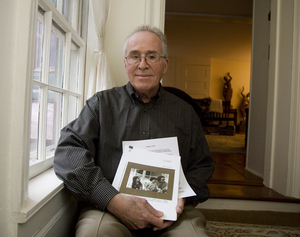
When
he dies, Abraham Leibson of Lambertville, N.J., wants to leave his
heirs a love of learning, the flexibility to change, and the courage to
face their fears.And while such abstract concepts cannot be
bequeathed as tangibly as a pocket watch or a stock portfolio, ideals
and values are part of one’s legacy, nonetheless – and they can be
passed from one generation to another.

So Leibson, who is 69 and
in good health, is writing an ethical will. “I want to show my children
what guided my way of life,” he says.

Shorter than a memoir, less
extensive than a family history, an ethical will is a
not-legally-binding statement that summarizes how you’d like to be
remembered.

With Americans turning 60 at the rate of about 8,000 a day, interest in ethical wills is exploding.

In
fact, baby boomers queried on inheritance last year by Allianz Life
Insurance said they’d be 10 times more grateful to receive life lessons
from their parents than to get material goods.

“As people age,
they want to know they mattered,” says Barry K. Baines, a Minneapolis
physician who began touting ethical wills after seeing their
effectiveness with hospice patients.

Baines envisions a low- or
no-cost approach to writing ethical wills, in part because there is no
prescribed way to do it. But the no-rules factor is also what makes it
a daunting task for some.

So Baines offers a $5 workbook, a $15 text, as well as tips on his site, www.ethicalwill. com. And he travels the country training trainers, who generally charge about $250 for a full-day group workshop.

Ethical
wills are rooted in Judeo-Christian tradition, he says, as a final
blessing by a father to his sons, or a leader to his followers. More
recently, they have turned up as last letters from dying grandparents.

Paul
Silberberg, president of the Philadelphia investment boutique CMS, has
such a letter from his grandmother. The original is framed in his home,
and he has carried a copy with him every day for 20 years.

“No
one can fully understand the joy and happiness I feel when you call,
when you visit, and most of all, when you join together in family
celebration,” it reads. ” . . . May you be forever warmed by my eternal
love.”

“Ten years ago, my wife and I wrote our own ethical will –
in the form of a letter to our children – because I saw how important
my grandmother’s letter was to me,” Silberberg says. “So we typed it up
and signed it and gave it to our lawyer to keep with our papers, so
that if and when . . . our children will get it.”

Increasingly,
ethical wills are attracting the attention of financial planners and
investment strategists who want to offer free workshops on writing them
as a do-it-yourself opportunity for clients.

“Good, bad or
otherwise, we’re all going to leave a legacy of some kind,” says
Kenneth Wheeler, an Episcopal Academy grad who practices tax law in
central Florida.

Once his clients have outlined the disposition
of their money and property, Wheeler urges them to consider the moral
heritage they’ll leave. He steers them toward the do-it-yourself
approach so no cost is incurred.

“I started soul-searching about
10 years ago,” Wheeler says. “And began to face the fact that legacy is
more than money and property.

“Our greatest fear is not that we’re going to die, but that we’ll be forgotten.”

An
ethical will also creates a space where you can explain the thinking
that went into your regular will, says North Jersey estate lawyer Gary
Garland, who trained with Baines.

A paragraph or two on why you
left more money to one child than to another, for example, is
inappropriate in a legal will, Garland says. “It muddies the legal
waters.”

“Besides, a regular will is read in public, and only
beneficiaries get copies. Maybe you have something you’d like to say to
someone who is not your beneficiary. And there’s a benefit to it being
a family heirloom instead of a legal document.”

Today’s ethical wills might be two paragraphs or two pages, recorded on audio or video, distributed immediately or posthumously.

Leibson
is writing three originals: one each for his son, his daughter and
himself. He’s working with local counselors David Cooling, a retired
Episcopal priest, and Ann Quinn, a retired corporate consultant.

Cooling
and Quinn, who studied with Baines, are based in Lambertville. In their
full-day workshops, which cost about $250 per person, they use prompts
such as “I learned about love from . . . ” or “I wish I’d known . . . ”
to get the process rolling.

“My experience is that people love the idea,” Quinn says, “but as with any do-it-yourself project, people get stuck.”

Leibson
says working in a small group created the comfort and inspiration he
needed. The process, he says, can be cathartic but daunting.

“It does make some people think they’re going to die when they finish it,” Leibson says.

Leibson
is also working on a separate, more detailed family history. So far, he
has distributed about a dozen loose-leaf-style pages with photos and
handwritten text to his son and daughter.

Still, he knows his ethical will has to be succinct and personal.

“I don’t want to mimic other people’s platitudes,” Leibson says. “And if I write too much, my children will just glaze over it.”


Resources on Ethical Wills

Books

Barry K. Baines, “Ethical Wills: Putting Your Values on Paper” (Perseus Books, revised 2006); www.ethicalwill.com.

Rabbi
Jack Riemer, “So That Your Values Live On: Ethical Wills and How to
Prepare Them” (Jewish Lights Publishing, revised 2006).

Classes

Writer
Anne Wolfe will start a class on ethical wills April 18 at Bucks County
Community College’s Newtown campus. For details, visit www.annewolfe.com.

Ann Quinn and David Cooling lead workshops upon request. Call 609-397-2122, e-mail ann@businessofbeing.com, or visit www.businessofbeing.com.


Contact staff writer Dianna Marder at 215-854-4211 or dmarder@phillynews.com. Read her recent work at http://go.philly.com/diannamarder/.

0 comments

Oral Storytelling: E-mailed Urban Legends

Many people think oral literature, or oral storytelling, is an ancient tradition of the past.

I have to admit, when I was young I pictured oral storytelling as involving an older performer who had an abundance of friendly smile-lines and an ample middle-age spread. They always acted a bit strangely but were generally pretty entertaining.

But we are all oral storytellers and keepers of the tradition! The entry for Oral literature at Wikipedia mentions Urban Legends when referring to a modern example of the early human pasttime. An urban legend is a perfectly-plotted story meant to teach us a lesson, albeit, at times, totally useless.

Taking it one step further, I’d classify viral e-mails as oral tradition. Their written delivery doesn’t erase the cultural meanings and norms surrounding their folklore characteristics. By viral e-mails I’m talking about any e-mails that fall under the “mass social” category, like chain e-mails, memes, contests, safety alerts, etc. In our pre-techie world, their lessons would have been relayed over backyard fences. I don’t think those lessons have changed simply because they are relayed via e-mail now.

Oral tradition, then, is alive and well, and in your very own Inbox. Delete what you will, but the tradition won’t ever be erased.

0 comments