The problem with early adopting
Since the whole “minimally viable product” approach came out, I’m not much of an early adopter. I’m done with being a lab rat for selfish developers and greedy start-up investors who don’t mind annoying people with their shit “products.” Silicon Valley asswipes should conduct some due diligence before they ask me to test their stupid app. They can pay my consultancy fee. Until then, I’m not their fucking app maid.
Other things have been going shitty for early adopters lately. What did early Google glass wearers get, besides a $1500 bill and shade thrown at them everywhere they went? They surely didn’t share in any Google Glass profits (if there were any). But forget Google. Start-up entrepreneurs regularly turn to crowdfunding sites to get the initial cash to get up off the ground, but their early supporters get little more than a nod when the project takes off. A little while ago, the Kickstarter supporters of Oculus Rift got shafted in the company exit to Facebook for $2billion. The early supporters didn’t even get their initial investment back, let alone share in that huge payout.
The sharing economy
 Some MIT grads have made an app to solve that problem. RocketClub is a way for early adopters to support new apps by being test dummies. (See this obviously-paid-for review of RocketClub.) In turn, the new app gives over a teeny bit of equity share in the company. This sounds like a good idea, right? Early adopters try things out for free anyway, so why not hook up potential users and developers?
Money motivation doesn’t work well for fans, that’s why. Behavioral Economists argue monetary compensation actually diminishes the participation of early adopters. It’s like asking friends to help you move. They’ll do it for free (perhaps expecting pizza and beer at the end of the day), but if you present it like a $10/hour job, they’ll turn you down. Motivation changes when money is introduced. RocketClub shouldn’t court early adopters, as the tiny bits of compensation will only decrease their interest. The company should reach out to more “normals” – people who wouldn’t ordinarily test buggy software. They will be more apt to work (by testing apps) than new-tech pioneers. Also, normals will be the ultimate end-users; it’s probably better to go directly to them if you want to know where the real bugs hide.
But here’s the real problem
It seems like the MIT grads didn’t do a lot of research, OR… they are counting on young people to spam their friends. Their main membership push is a straight-outta-the-90s pyramid scheme. Get friends to sign up and your ranking moves up on some vague-promises list.
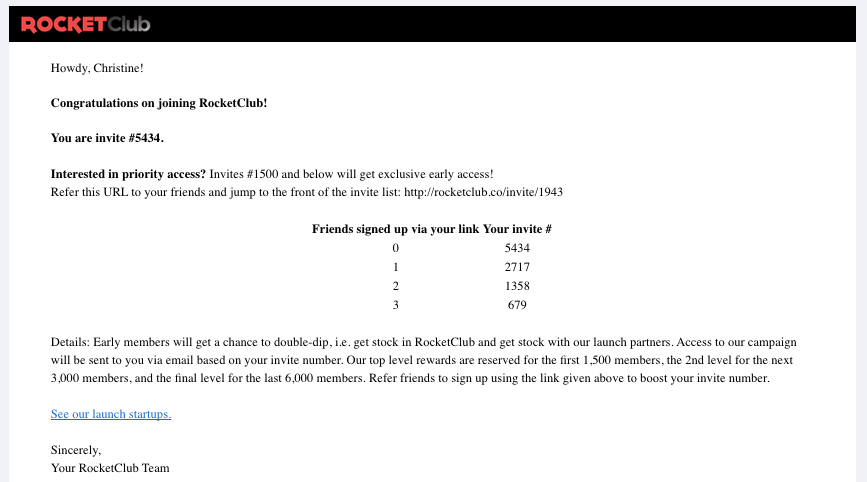
Have your friends join so you can kick their skulls while you climb to the top on their shoulders. Fun!
This email ended my participation. If I can’t find an unsub link at the bottom of their emails, I’ll just dump it in the spam folder and forget about it. Going back to the site and deleting my account is even more effort than I’m willing to give. (And no, this isn’t a disguised call for you to use that URL. I’m just too lazy to blot it out. If I wanted to participate in spamming my readers, I’d just tweet out the URL).
Who knows? Maybe they’ll get it to work for them. But most users are pretty savvy and pretty hateful toward gameable rankings (see Foursquare). they’ll get the select few young (probably white, middle class) competitive men and those idiots will in turn chase away the normals. Welcome to the Silicon Valley clusterfuck, MIT. You just pumped more air into the bubble.
Shit’s annoying.
One of these days there will be an Internet for the rest of us.