≡ Menu

Wake-up Call

In my early-morning haze, I opened an emailed receipt that showed a $95 transaction for an e-book purchase. I summoned my young teen in a panic. “Did you buy this!?” Ridiculously over-priced listings on Amazon or eBay exist and I thought she inadvertently bought the wrong copy of a school reading requirement. My daughter reflexively denied buying anything. She didn’t even recognize the book title. That’s when I started waking up. This is why we shouldn’t check email in the early hours, and why we shouldn’t check email using mobile.

Full Client

When using Chrome (or other browsers), I depend on the hover feature. Hold your cursor over a link, and the link’s URL address pops up in a window. This allows you to read the contents of the link without having to click through to its site. Absolutely essential in the fight against spoofing and other email scams, the link hover feature doesn’t work on touch screen devices like my iPhone. Our behavioral switch toward mostly using mobile computing hasn’t escaped the bad guys who know we check links before we click and that pre-checking a link on mobile isn’t possible. Plus, they count on us being tired and distracted when we check email. So they devise and design clever spoofs like this:

an email that looks like it comes from the Apple Store

Looks legit. It isn’t. The offer of a refund would’ve NEVER come from Apple!


My daughter returned to her room to finish preparing for the school day (probably rolling her eyes at me as she went). I scooted over to my laptop. I [continue reading…]

2 comments

11 Awkward Things About Email

This is fantastic:

wait but why: 11 Awkward Things About Email

The folks at waitbutwhy.com have perfectly broken down present-day email etiquette. They take us through the subtleties of the ellipse-ending, the concentric circles of trust, how to tell if you’re someone’s subordinate and more:

If someone you’re emailing with:
– is making typos and you’re not
– is skipping punctuation and you’re not
– is skipping capitals and you’re not
– is taking a long time to reply and you’re not
– is responding to your long, well-written emails with much shorter responses
Then you’re their bitch.
Unequal email power dynamics can happen for many reasons—a professional ladder discrepancy, an age discrepancy, a “customer’s always right” situation, a thing where many people are all emailing one person—but usually, it’s that the person writing the high-quality email wants/needs something from the person writing the low-quality email. Simple as that.


It’s brilliant stuff, delivered via stick figure cartoons. Go take a look.

ellipseswaitbutwhy
0 comments

Missing pieces: Why you don’t feel grateful

woman's face with red, yellow, white, green and blue puzzle pieces painted on, with a missing piece around her right eye

GIVE THANKS! NOW!

Today is Thanksgiving Day (in the US). A common tradition is taking a moment during dinner when each person reports one thing for which she is grateful. I don’t like this tradition.

Gratitude cannot be forced. When I was growing up in catholic school, the nuns, priests and lay teachers drilled the guilt of gratitude all day, everyday. We were to be thankful for everything, it seemed: for our fortune (good or bad), our health, our siblings, our parents, our school lunches (this was just plain nonsense – that food was horrible). I struggled with this message. If I dared admit I felt no gratitude for any of those things, I was condemned. The same message was delivered at home. Even society had a whole day dedicated to making me feel guilty about lacking gratitude.

Fast forward 2 decades, the onset of the Internet and Web, and the message is truly everywhere. Positive psychology gurus insist a “gratitude journal” is an essential part of daily happiness. A common social media meme is “3 great things about today” posts. Articles on news sites and blogs praise the supposed magical effects of infusing gratitude into work and life. Refusing to participate in these contrived displays of goodness will earn you a “grumpy” or “self-centered” label.

True gratitude cannot be coerced. It cannot be solicited. Gratitude isn’t delivered through shaming or condemnation. The question isn’t, “How selfish can she be that she shows no gratitude?” The question is, “What piece of her puzzle is missing that keeps her from feeling grateful?”

Missing pieces

Gratitude is the picture that emerges when a puzzle is complete. Being grateful flows naturally from a full heart and a solid spirit. If someone isn’t [continue reading…]

8 comments

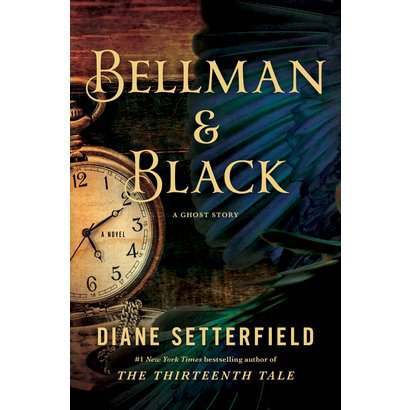
January 2019 UPDATE: Since writing this review, I’ve learned a bit about the difference between guilt and shame. If I could write it again, I’d make that distinction more clear. For example, I would add that Bellman felt shame as a child for his situation (which was out of his control) and later he felt guilt, for his actions or the lack of them. For more about shame, seek out expert Brené Brown.

bellmanblackcover

“You will have seen rooks.”

Warning: //spoilers//

In the follow-up to her smashing debut novel The Thirteenth Tale, Diane Setterfield starts out Bellman & Black with a quote by Mark Cocker in Crow Country:

“You will have seen rooks.
 Don’t be put off by any sense of familiarity.
 Rooks are enveloped in a glorious sky-cloak of mystery.
 They’re not what you think they are.”

This is Dr. Setterfield’s hint to us, the readers, that her 2nd novel is not what we, at first impression, think it is.

picture of a black bird squawkingReviewers have been indeed put off by a sense of familiarity with the book’s themes of death and grief. So enamored are readers by William’s killing of the rook and Bellman’s elaborate theater of grief that they miss Setterfield’s point entirely.

Despite missing the point, some readers still manage to love the book. Setterfield’s deft turn of phrase, her grasp of the historical milieu, her haunting rook observations, are enchanting in themselves. Although some reviewers do get close to understanding the mind of the rook, most are too mercifully lost in the details of William’s story to personally experience the extreme level of creepiness Setterfield delivers.

Yes, I said mercifully lost. A reader enthralled by the surface of this story doesn’t feel her own rooks right behind her.

Here’s the point everyone seems to be missing: Bellman & Black is not about death. It isn’t about grief. It’s about guilt. It’s about the guilt we all have. It’s about the regret that destroys us, and how we humans, in what looks like folly to Thought & Memory, attempt to press our guilt and regret away, as if we can iron wrinkles out of the fabric of time.

Let me explain.

[continue reading…]

15 comments

Texting is shifting the meaning of punctuation.

The Period, Our Simplest Punctuation Mark, Has Become a Sign of Anger | New Republic:


The period was always the humblest of punctuation marks. Recently, however, it’s started getting angry. I’ve noticed it in my text messages and online chats, where people use the period not simply to conclude a sentence, but to announce “I am not happy about the sentence I just concluded.”

Say you find yourself limping to the finish of a wearing workday. You text your girlfriend: “I know we made a reservation for your bday tonight but wouldn’t it be more romantic if we ate in instead?” If she replies,

we could do that

Then you can ring up Papa John’s and order something special. But if she replies,

we could do that.

Then you should probably drink a cup of coffee: You’re either going out or you’re eating Papa John’s alone.

I haven’t been told that my text message punctuation or lack thereof conveys inadvertent tones, but I have wondered if my peers without unlimited texting plans hate my use of the single line. Instead of periods, I hit return and text the next line. I do this when I want to separate a thought but don’t want my texts to seem like APA-style academic dissertations. When I text my friends, I try to convey the very casual timber of our face-to-face conversations. Periods and correct written grammar impede that effort.

Language purists, who I guarantee you are NOT language experts, are at this very moment trying to unbunch their briefs. they can chill. Spoken language didn’t change much in the advent of written language, and formally written language will not change much in light of texting. Room exists for many different uses of the typed word. We need not mourn the death of all that holds our culture aloft.

K
that’s it
ttyl

1 comment